

Liftgate Truck for Sale: What to Check Before You Buy
Finding a liftgate truck for sale is only the first step. The right truck must fit the freight, loading locations, route, and daily work, not just have a platform at the rear. Before you compare individual vehicles, define what the liftgate needs to move and check how the truck’s body, payload, condition, and operating setup work together.
Contact us about a liftgate truck
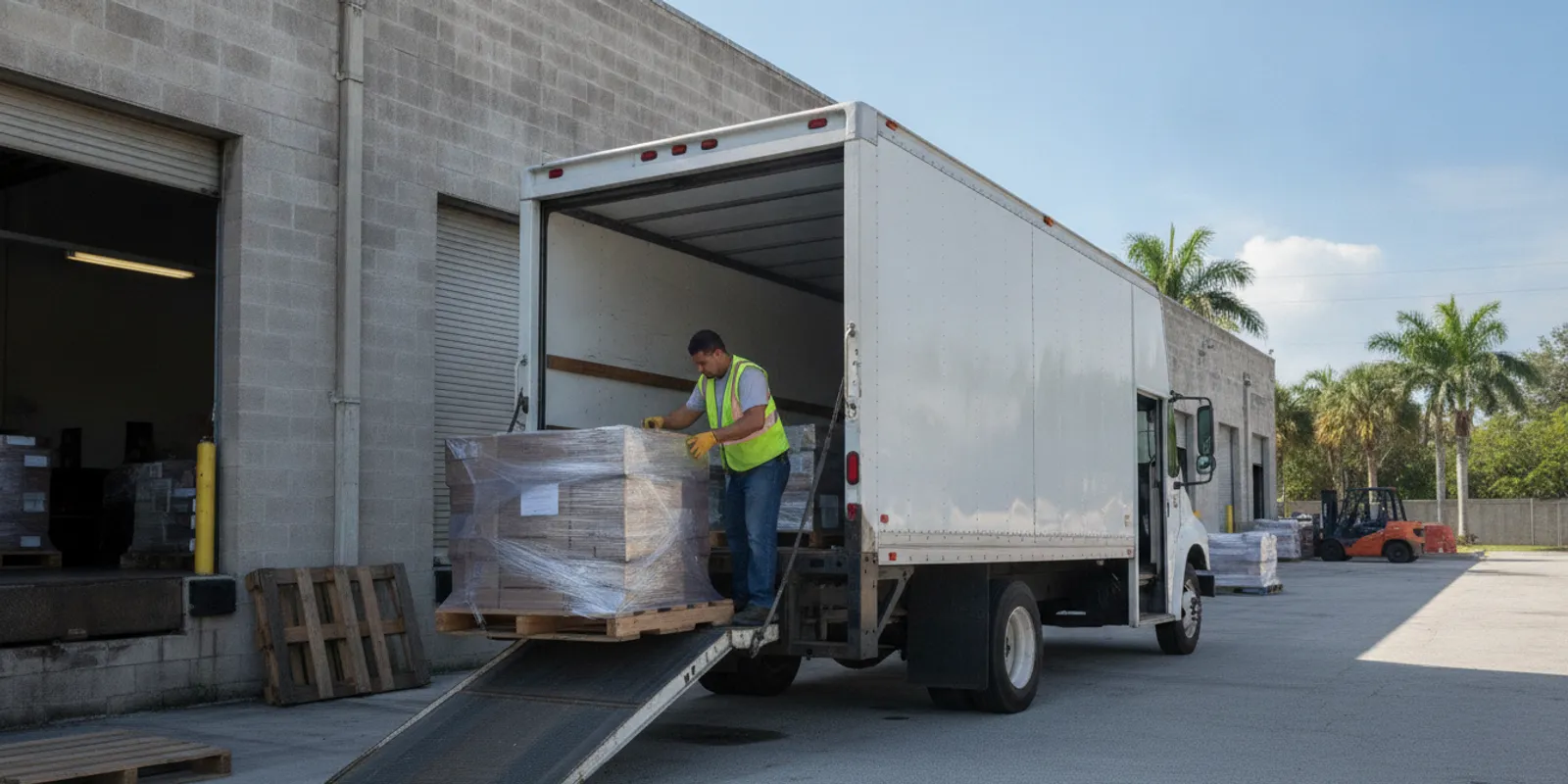
What work will the liftgate do?
Start with the heaviest item or load the liftgate will handle, then consider how often it will be used and where loading happens. A truck used for a few heavy deliveries each day has different demands from one making many stops with mixed freight. Include the people, carts, pallet jacks, or other equipment that may travel on the platform, not only the cargo itself.
Write down the answers to these questions before shopping:
- What is the heaviest single item or unitized load?
- Will the load be moved on a pallet, cart, dolly, or by hand?
- How many liftgate cycles are typical in a day or week?
- Will the truck load at docks, street level, customer sites, or uneven driveways?
- How much room is available behind the truck at common stops?
- Does the route involve narrow streets, low clearances, or frequent parking in tight areas?
These details help you avoid choosing a truck based on an appealing feature that does not match the real work. If your freight stays at dock height and your locations consistently provide dock access, a liftgate may be less important. If customers lack docks or crews must lower heavy goods to ground level, it can be central to the delivery process.
For example, a contractor moving bulky equipment between job sites may care most about the load’s weight, the platform’s usable size, and ground clearance at uneven sites. A distributor making repeated deliveries to small businesses may focus on reliable operation, quick access, and maneuvering room at each stop. A transportation company carrying varied freight should check the heaviest likely shipment as well as the typical one. These are different use cases; there is no single liftgate configuration that fits every route.
How do you match liftgate capacity to the load?
Check the liftgate’s rated capacity on its identification plate and compare it with the heaviest expected load. Do not estimate capacity from the platform’s size or appearance. A larger-looking platform is not necessarily rated for more weight, and a liftgate’s rating does not tell you how much payload remains for freight after accounting for the truck and its equipment.
Think about the entire load placed on the platform. Cargo, pallet, cart, and any equipment traveling with it all contribute to the weight. The center and distribution of the load matter too: a load positioned far out on the platform can create different demands than one centered near the truck. Follow the liftgate manufacturer’s instructions and warning labels; do not exceed the stated rating or use the platform in a way the instructions prohibit.
Ask the seller to identify the liftgate make and model, show the capacity label if it is present, and explain what records are available. If the label is missing or unreadable, treat that as an unanswered question, not a reason to guess. Get the details checked before relying on the equipment for a particular load.
Which liftgate style fits your loading routine?
Liftgate designs trade off platform access, clearance, stowage, and how they fit the truck body. Common designs include rail-style, tuckaway, column, and cantilever liftgates. Names and configurations vary by manufacturer, so assess the specific unit rather than assuming that one type is automatically best.
| Liftgate style | What to consider | Questions to ask |
|---|---|---|
| Rail-style | Platform and rails remain at the rear when stowed; check rear access and clearance. | Will the stowed gate interfere with doors, dock access, or the route? |
| Tuckaway | Platform stores beneath the body; ground clearance and the truck’s underbody layout matter. | Does it stow and deploy cleanly, and is there enough clearance for your locations? |
| Column | Vertical components guide platform movement; inspect alignment and full travel. | Does the platform travel smoothly through its range and suit the loading height? |
| Cantilever | The platform pivots outward; consider its footprint and how it meets the ground or dock. | Can operators use it safely in the available space at your delivery stops? |
This is a starting point, not a substitute for inspecting a particular truck. Match the gate’s design to the body, door arrangement, loading height, and places where your crew works. If your operation needs clear access to the rear while the gate is stowed, confirm that the chosen configuration actually provides it.
Ask how the gate sits when stowed and what steps are required to deploy it. Check whether the platform can meet the surfaces you encounter and whether its footprint leaves enough space around the truck for safe work. If deliveries include a variety of locations, make a list of the most restrictive conditions and ask how the specific gate handles them. Do not rely on the style name alone to answer questions about clearance or compatibility.
Will the truck have enough payload after the liftgate?
A liftgate is useful only if the truck can also carry the cargo your business needs. Compare the truck’s actual weight and rated limits with the weight of the body, liftgate, fuel, occupants, tools, and planned freight. The vehicle’s door labels and available weight documentation are more useful than a general description such as “heavy duty.” Ask to review the specific truck’s ratings and records.
Build a realistic payload estimate instead of relying on the maximum figure in an advertisement. List typical freight, the heaviest expected load, driver and passenger weight, carts or pallet jacks, and equipment kept on board. If your work includes changing loads, use the demanding scenario as a check. A commercial truck that runs close to its limits can restrict what you carry and how you plan each trip.
Rules for commercial vehicle operation can depend on vehicle weight, configuration, and use. Confirm the requirements that apply to your vehicle and operation with the Federal Motor Carrier Safety Administration and other appropriate authorities. Do not assume that a truck’s body style alone determines what credentials or operating rules apply.
Does the body provide enough room and access?
The truck body needs to accommodate both your freight and your loading process. Measure or confirm the interior length, width, and height, and compare them with the largest items or pallets you expect to carry. Check door opening dimensions as well. Interior space can be adequate on paper while the opening, wheel wells, or other obstructions make loading awkward.
Look closely at the rear doors and how they work with the liftgate. Confirm that the doors open fully, latch securely, and do not collide with the platform or its hardware. Consider side-door access if the work requires it, and review the body floor for damage, soft areas, water intrusion, or repairs that deserve further inspection.
For recurring routes, think through a complete delivery: where the truck parks, where the platform comes down, how the load moves from the platform into the body, and where the operator stands. A practical walk-through with representative freight or equipment may reveal a mismatch that a quick look at the exterior will not.
How should you inspect a liftgate truck for sale?
Ask for a demonstration and watch the whole operating cycle, from stowed position to the working position and back. The truck should be on a suitable, level surface, and the operator should follow the manufacturer’s safety instructions. Keep people clear of moving equipment, pinch points, and the platform while it operates.
During the demonstration, check for smooth and consistent movement, unusual noise, visible leaks, damaged hoses or wiring, loose hardware, and signs of impact or bending. Look for corrosion or repairs around mounting points and the truck frame. Examine the platform surface, edges, rails, hinges, pins, and safety features. Confirm that controls are present, clearly identified, and responsive, and ask how emergency or manual procedures are handled according to the equipment documentation.
Do not treat a single successful cycle as proof that the liftgate is ready for daily commercial use. Ask how the gate was maintained, whether maintenance history is available, and whether any recent repair or recurring problem is known. A missing record does not automatically tell you the equipment is defective, but it does mean you should base the decision on a careful inspection rather than an assumption.
As you inspect, note anything that should be answered before purchase: a missing capacity label, inconsistent movement, damaged wiring, corrosion near an attachment point, or a control that does not respond as expected. Ask the seller to explain each concern and document what is known. If the equipment cannot be demonstrated safely or a concern needs diagnosis, pause and have it evaluated rather than presuming it is a minor issue. You are checking condition and gathering facts, not attempting a repair yourself.
Bring your own qualified mechanic or arrange an independent inspection before you commit. DeBary Truck Sales says buyers may bring their own mechanic or have a truck taken to a local shop of their choice. A mechanic can evaluate the truck and liftgate as a system, including areas that a buyer cannot assess from a walk-around. Discuss the scope and arrangements with the seller in advance.
What records and truck history should you review?
Request the available maintenance history for the truck and any documentation for the liftgate. Useful information may include the liftgate make and model, rating, operating instructions, maintenance or repair records, and any known issues. Compare what you are told with what you can see on the equipment. If the records identify a repair, ask what was done and whether related components were checked.
Truck history matters because the chassis, body, and liftgate have all had their own working lives. Ask who operated the truck, what kind of work it performed, and whether the truck was maintained as part of a fleet. DeBary Truck Sales focuses on one-owner, fleet-maintained trucks and has maintenance history available on most trucks; confirm the records for the specific vehicle you are considering rather than assuming every file is the same.
DeBary Truck Sales describes its commercial trucks as receiving a 31-point inspection before sale and includes a 90-day warranty at the advertised price. Ask what applies to the particular vehicle and request the written warranty terms, including coverage, exclusions, and how a claim is handled. Review the documents rather than interpreting a general description as a promise about every component or every kind of repair.
How do routes and operating conditions affect the choice?
Map the truck’s usual stops, not just its mileage. A liftgate can be valuable where docks are unavailable, but the driver still needs enough space to position the truck and operate the platform. Check typical parking conditions, street slopes, driveway transitions, overhead obstructions, and the space needed for carts or pallet jacks. A platform that works at the warehouse may be awkward at a customer’s property.
Also consider loading frequency and turnaround. If the gate will cycle repeatedly during a shift, pay close attention to its condition, controls, and the operator’s ability to use it consistently. If it is used occasionally, the gate still needs to work when called on, but your priorities may place more emphasis on cargo space, vehicle condition, and total payload.
Florida operators may work in varied urban, suburban, and regional settings. Businesses serving Orlando, Sanford, Daytona Beach, Kissimmee, or Deltona should assess their own delivery locations instead of assuming one local route pattern fits all. Buyers outside Florida can make the same checks against their own route and loading constraints.
How do you compare a liftgate truck for sale with other options?
Compare the trucks on the same set of practical criteria. Record the details for each one, note anything that needs confirmation, and separate verified facts from seller estimates or assumptions. This helps prevent a conspicuous feature from overshadowing a more important mismatch in payload or condition.
- Liftgate: design, labeled capacity, platform dimensions, operation, visible condition, and available records.
- Truck: actual weight information, rated limits, engine and chassis condition, maintenance history, and inspection findings.
- Body: interior and door measurements, floor condition, configuration, and loading access.
- Fit for work: freight dimensions and weights, loading sites, route constraints, and frequency of use.
- Ownership decision: documented price and fees, warranty terms, financing questions, delivery arrangements, and any work needed before use.
When one truck has a higher liftgate rating, do not treat that number as the entire answer. The truck still has to carry the load within its own limits, fit the route, and provide the interior space your work requires. Likewise, a truck with an appealing body or lower stated mileage may not be the best choice if the liftgate’s history or operating condition is unclear.
What should you budget beyond the purchase?
Consider the complete cost of putting the truck into your operation. In addition to the purchase price, ask about applicable dealer fees and the written terms of any warranty. Account for insurance, registration, inspection, transportation, and any business-specific equipment or setup you need. Those amounts depend on the vehicle and buyer, so confirm them rather than relying on a broad estimate.
Financing can be part of the purchase plan. Buyers who want to explore it can review DeBary Truck Sales’ commercial truck financing information and ask for terms for the specific truck. Compare the full written terms and your expected operating costs; do not judge affordability from a payment estimate alone.
If you already own a commercial vehicle, ask whether a trade-in fits your plan. The dealership’s trade-in information can help you start that conversation. If you need to sell a truck separately, use the sell your truck page to review that option. Keep the liftgate truck purchase and any trade or sale values clear in the written figures you compare.
Should you buy a truck with a liftgate already installed?
An installed liftgate can make sense when its capacity, condition, and configuration fit your work. It may also save the time and uncertainty of selecting equipment for a truck body later. The key is verifying fit: the gate should suit the truck, loading routine, payload, and the kinds of delivery sites you serve.
On the other hand, do not pay for a feature you cannot use or that creates compromises elsewhere. If the gate is the wrong size or configuration, obstructs a needed access point, or has unresolved condition questions, the truck may not be right for your operation. Ask for the equipment details and compare them with your written requirements. DeBary Truck Sales also has a fabrication services page for buyers who want to learn about its fabrication capabilities; discuss any specific truck-body or liftgate project directly with the dealership rather than assuming a particular modification is available.
How can you prepare before contacting a seller?
A clear request makes it easier to determine whether a truck is worth a closer look. Gather the basics before you call or send an inquiry:
- Describe the freight and the heaviest load the gate will handle, including pallet or cart weight.
- Share the approximate dimensions of the largest items and how they are loaded.
- Explain where the truck will work: docks, street-level stops, job sites, or a mix.
- State how often the liftgate will be used and how much room is available at the rear.
- Ask for the truck’s ratings, liftgate identification and capacity, available maintenance records, and current operating demonstration.
- Ask what inspection, warranty, fees, financing, or delivery details apply to that specific truck.
DeBary Truck Sales is based in Sanford, Florida, and serves buyers in Florida and beyond. You can review used commercial truck inventory as a starting point, then confirm current availability and liftgate details with the sales team. Inventory and equipment configurations can change, so verify the particulars of any listing before making travel or purchase plans.
Ask about current liftgate truck options
Frequently Asked Questions
Can any liftgate carry a pallet?
Not necessarily. Check the specific liftgate’s rated capacity, platform dimensions, instructions, and condition. Include the pallet, freight, and any equipment or people permitted on the platform when calculating the load, and follow the manufacturer’s limits.
Is liftgate capacity the same as truck payload?
No. Liftgate capacity is the rating for the liftgate under its stated conditions. Truck payload depends on the truck’s own ratings and actual weight, including its body, liftgate, fuel, occupants, and equipment. Check both sets of information for the specific vehicle and load.
Should I test the liftgate before buying?
Ask to see it operate through a full cycle under appropriate conditions, and have the truck and equipment inspected by a qualified mechanic. A demonstration is useful, but it does not replace a close assessment of condition, maintenance records, and the written terms of the purchase.
Can I bring my own mechanic to inspect a truck?
DeBary Truck Sales says buyers may bring their own mechanic or have the truck taken to a local shop of their choice. Confirm the arrangements and inspection scope with the dealership before scheduling.
Ready to find a liftgate truck?
Make your decision around the load, liftgate rating, truck payload, body access, route, and documented condition. Once those requirements are clear, you can compare available trucks on practical fit instead of relying on appearance alone.


