

What Is a Step Van? Sizes, Uses, and What to Check on a Used One
Table of Contents
- What makes a step van different from a regular van?
- Which jobs are step vans suited to?
- How do step van sizes affect the work?
- Should you choose a gas or diesel step van?
- What are the latest models of step vans?
- What should you check on a used step van?
- Inspect the body, floor, and doors
- Evaluate shelving and prior modifications
- Review chassis records and mechanical condition
- Match capacity and dimensions to the job
- How can you compare step vans without overlooking details?
- Frequently asked questions
- Can you stand up inside a step van?
- Is a step van the same as a food truck?
- Are diesel step vans always better for long routes?
- What matters more: mileage or engine hours?
- Ready to compare a step van with your route?
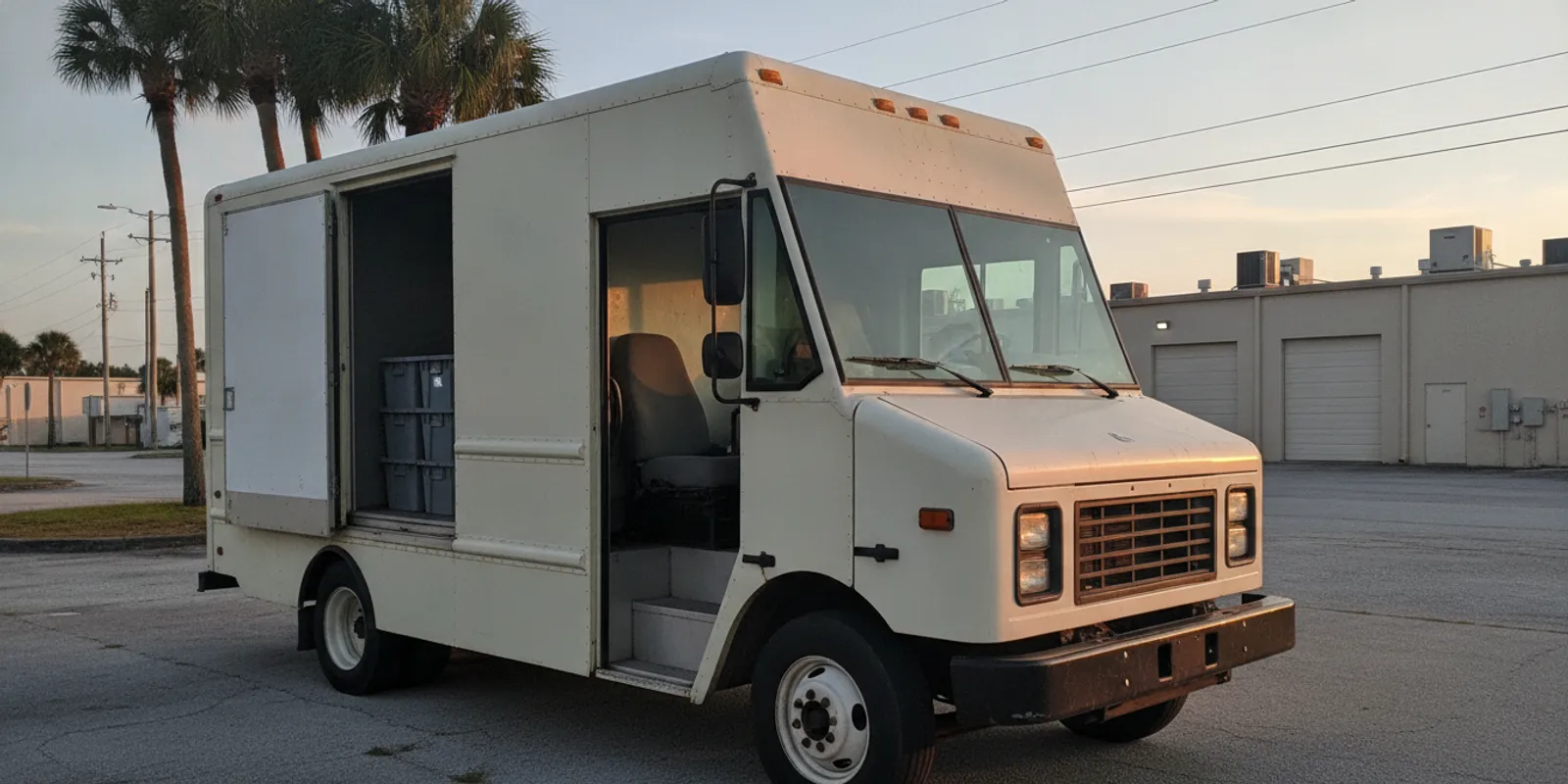
A step van is a commercial vehicle with a walk-in body that lets a driver stand and move between the cab and cargo area. Its tall, box-shaped body and step-through access suit work that involves frequent stops, loading, or reaching equipment throughout the day.
What makes a step van different from a regular van?
A step van is designed around an upright, roomy work body rather than a low roof and passenger-car-like cabin. The driver can typically walk into the cargo area without crouching, and the cab is integrated with the body or connected by a walk-through opening. A side door or rear door may provide another way to enter, depending on the particular vehicle.
The name comes from the low step into the cab. That can matter on a route with many stops, where getting in and out repeatedly is part of the job. A step van is still a commercial vehicle, so the exact entry height, interior clearance, door arrangement, and available working area vary by body and chassis. Do not assume every vehicle with a tall body has the same layout.
Compared with a conventional cargo van, a step van often provides more vertical working room and a larger uninterrupted cargo space. A box truck may offer a separate cab and cargo body, with different access between them. A step van occupies a useful middle ground for businesses that need a walk-in workspace or frequent access, but the right choice depends on the route, cargo, parking and loading conditions, and driver workflow.
Which jobs are step vans suited to?
Step vans are used for routes where the driver needs to enter the body regularly or organize equipment for repeated stops. The vehicle is a platform, not a job-specific guarantee: shelving, access points, and interior fit-out make a major difference. Consider the daily work before choosing a body style.
- Parcel and local delivery: A walk-in cargo area can make it easier to sort packages by stop and retrieve them without climbing into a low-roof van. Think about the number and size of parcels, the order of deliveries, and where the vehicle can park.
- Linen and supply routes: Shelving or divided storage may help separate clean goods, used items, or supplies. Confirm that the actual layout suits the load and that shelves do not obstruct doors or safe movement.
- Food and mobile vending work: A step van can be adapted for a work area or product access. Requirements differ with the type of operation, equipment, and local rules, so confirm the intended build and approvals before purchase. For food transport specifically, compare your needs with the separate step van inventory and the relevant body configuration rather than assuming all step vans are food trucks.
- Utility and contractor routes: The tall body can carry organized tools, materials, or job supplies. Evaluate shelving, secure storage, body condition, and access at the sites you visit.
- Municipal, campus, and fleet operations: A step van may serve as a specialized support vehicle, depending on body layout and equipment needs. Check the operating environment and vehicle dimensions against the route.
For a business delivering prepared or temperature-sensitive food, the body and temperature-control equipment are separate considerations. A step van is not automatically refrigerated. DeBary's article on commercial vehicle options can help you explore different vehicle types, while the individual unit's specifications should guide the final comparison.
How do step van sizes affect the work?
Step vans are built in a range of body lengths and layouts. There is no single standard size that fits every route, and a vehicle's useful interior dimensions can be different from its exterior length. The right question is not simply “How long is it?” It is whether the body accommodates the load, works at the delivery locations, and remains manageable for the driver.
| General body size | Where it may fit | What to verify |
|---|---|---|
| Shorter body | Compact local routes, lighter loads, or locations with tighter access | Interior aisle and storage space, payload capacity, turning space, and door clearance |
| Mid-size body | Mixed-stop routes needing a balance of room and maneuverability | Actual usable length and height, shelving footprint, and whether the load can be arranged safely |
| Longer body | Higher-volume routes or operations carrying larger equipment or more goods | Parking and loading access, overall vehicle dimensions, axle and weight ratings, and route restrictions |
These are planning categories, not fixed industry measurements. A seller's stated body length may describe an exterior measurement. Ask for the measurement method and verify the inside length, width, and height yourself or with a qualified inspector. Measure bulky items, shelving, carts, and any equipment that must pass through the doors. Include the space needed to turn and work safely inside, rather than calculating capacity as though every inch were usable.
Route conditions matter as much as cargo volume. Check low-clearance structures, narrow streets, customer loading zones, parking stalls, and any weight or access limits on the route. A longer body may reduce the number of trips but can create daily access problems. A shorter one may be easier to place but leave too little room for the load or workflow.
Should you choose a gas or diesel step van?
Gas and diesel are both chassis options buyers may encounter. Neither fuel type is automatically right for every operation. Compare the actual engine, transmission, chassis, maintenance history, vehicle condition, and expected route. Fuel alone does not tell you what a used vehicle will cost to operate or how well it will fit the job.
- Consider the route: Frequent short trips, long highway segments, extended idle time, hills, and daily distance affect how a vehicle is used. Describe a normal workday when comparing candidates.
- Review maintenance documentation: Ask what records are available and whether they identify the maintenance performed and dates or mileage. A truck with a documented history is easier to evaluate than one whose past is unclear, but records do not replace an inspection.
- Check operating requirements: Confirm that the vehicle can meet your business's payload, route, and local operating needs. Verify the ratings on the specific unit; do not rely on a general fuel-type rule.
- Estimate the full operating picture: Include fuel, routine maintenance, repairs, insurance, registration, and the cost of downtime in your planning. These costs depend on the specific truck and business.
A route truck may accumulate significant engine hours while moving relatively few miles, especially if it spends time idling or working at stops. That makes mileage only one part of the history. Ask whether hour-meter readings are available, and interpret them alongside service records, engine condition, and the vehicle's prior work. A high or low number alone does not establish whether a truck is a sound purchase.
What are the latest models of step vans?
There is no single current “latest step van” model that applies across the whole category. A complete vehicle combines a chassis and powertrain with a body, and the two can have different manufacturers, generation changes, and equipment. A body may look similar across multiple chassis generations, while a familiar chassis name can cover meaningful changes in configuration over time.
For a used-vehicle search, treat “latest model” as a question about the particular chassis generation and body configuration, not just a badge or a year. Identify the chassis make and model, model year, engine, transmission, and body builder where those details are available. Then compare the actual condition, records, dimensions, and equipment with what your route requires. Avoid assuming that a newer year automatically means a better fit or that a body design has remained unchanged.
Ask for the vehicle identification and build information for the specific unit you are considering. Use it to confirm configuration and check any applicable manufacturer information with the relevant source. When comparing inventory, keep the details side by side rather than relying on a broad model label. You can browse current used commercial inventory and ask the sales team about the information available for an individual vehicle.
What should you check on a used step van?
Start with the work the vehicle needs to do, then assess the body and chassis as separate but connected parts. A used step van may have been outfitted for a previous operator. That layout can be helpful, but check whether it suits your operation and whether alterations or wear need attention. DeBary Truck Sales focuses on one-owner, fleet-maintained trucks, with service records available for many vehicles; ask about the history of the specific unit rather than assuming every record is identical.
Inspect the body, floor, and doors
Look closely at the floor for soft spots, damage, separation, patches, or signs of water entry. Examine interior and exterior seams, lower body panels, corners, and the area around the roof and doors. Check for corrosion, impact damage, poorly finished repairs, or evidence that water has entered the body. A visual review can identify concerns, but a qualified inspection may be needed to assess hidden damage.
Operate each door through its full range. A roll-up door should move smoothly and stay in its intended position; inspect the tracks, springs, latch, seals, and surrounding structure. Check rear and side doors for alignment, secure latching, damaged hinges, and worn weather seals. Look at the entry step, handholds, and cab access as well. A door that sticks when the truck is stationary may be more difficult to use repeatedly on a route.
Evaluate shelving and prior modifications
Check shelves, partitions, tie-downs, cabinets, and other installed equipment for secure mounting and damage. Look behind or beneath modifications for exposed wiring, unfinished holes, water paths, or changes that may affect the body's structure. Decide whether the existing layout saves useful setup work or needs to be removed or changed. If you need a different body or configuration, review available truck body options and ask what modifications are feasible for the particular vehicle.
Review chassis records and mechanical condition
Request the available maintenance history and compare it with the odometer and any hour-meter reading. Look for consistency in dates, mileage, and the work recorded. Ask what is known about the truck's previous duty and how it was maintained. DeBary sources one-owner, fleet-maintained vehicles and does not buy auction trucks, but a sourcing practice is not a substitute for reviewing a truck's own documentation and condition.
During an inspection, pay attention to warning lights, engine operation, transmission behavior, steering, brakes, suspension, tires, and visible leaks. Check that cab controls and safety equipment work. If possible, arrange an independent inspection by a mechanic of your choice before committing. A walk-around cannot establish the condition of every component, and the right inspection scope depends on the vehicle. Depending on how the truck is used, commercial vehicle rules may apply; consult the Federal Motor Carrier Safety Administration and relevant state authorities to identify requirements for your operation.
Match capacity and dimensions to the job
Confirm the chassis and body ratings from the vehicle's labels and documentation. Work out the weight of the typical load, shelving, tools, and occupants, and compare it with the applicable ratings. Do not use cargo volume as a substitute for payload. Verify overall height and length against the route, garage, loading area, and parking location. Confirm that the step van can accommodate both the goods and the people who need to work inside it.
How can you compare step vans without overlooking details?
Use the same questions for every candidate. This makes differences clearer and prevents a striking interior or low odometer reading from distracting from a critical mismatch. Keep notes on the unit's exact identification and confirm details directly with the seller.
- Write down the route and load: Include typical stops, distance, parking conditions, cargo dimensions, payload, and any equipment needed.
- Set body requirements: Record minimum interior measurements, door types, access needs, and whether the existing shelving is useful.
- Compare chassis information: Note engine and transmission, ratings, odometer reading, hours if available, and maintenance documents.
- Inspect and test: Examine the body, doors, cab, and visible mechanical components. Arrange a qualified inspection when appropriate.
- Check the total plan: Consider purchase budget, expected preparation, operating costs, and how long the business can manage if the truck is unavailable.
Buyers in Sanford and greater Central Florida can consider how local job sites and routes around Orlando, Daytona Beach, Kissimmee, and Deltona affect vehicle size and access. For a vehicle located in Sanford, plan an in-person review if practical. DeBary Truck Sales is based in Sanford and serves buyers beyond Florida as well; confirm shipping or delivery arrangements for the specific purchase.
If you are still deciding whether a step van matches the business, compare it with other body styles in the commercial vehicle inventory. To narrow the search by a vehicle's fuel and chassis details, ask for the specific records available rather than making a decision from the listing title alone.
Frequently asked questions
Can you stand up inside a step van?
Many step vans have a tall cargo body intended for upright access, but interior height varies. Check the measured clearance on the specific vehicle and account for any flooring, ceiling equipment, or other modifications.
Is a step van the same as a food truck?
No. A step van is a vehicle and body style. Some may be configured for food-related work, while others are used for deliveries, supplies, utilities, or other routes. Verify the equipment, body layout, and any approvals your operation requires.
Are diesel step vans always better for long routes?
No fuel type alone determines whether a vehicle suits a route. Compare the particular engine and chassis, condition, maintenance history, route demands, payload, and expected operating costs. A qualified inspection can help assess a used unit.
What matters more: mileage or engine hours?
Both can provide useful context, but neither tells the full story by itself. Route vehicles may idle or spend time working at low speeds, so compare mileage and hours where available with maintenance records, condition, and prior use.
Ready to compare a step van with your route?
A step van can be a practical choice when its walk-in body, dimensions, access, and chassis fit the work. Define the route and load first, then verify the specific vehicle's measurements, records, condition, and equipment before deciding. Contact DeBary Truck Sales to discuss what you need and review available information for an individual truck.


