

Used Dump Truck Prices: What Drives the Cost
Table of Contents
- What makes used dump truck prices vary?
- How does axle configuration affect the comparison?
- How do body length and material affect value?
- What should you review about the engine and transmission?
- How do mileage, hours and records shape the decision?
- Why does the truck’s emissions era matter?
- How can you compare two dump trucks fairly?
- How does financing change the monthly picture?
- What should a Florida buyer prepare before contacting a dealer?
- Frequently asked questions
- Can I use one average price to judge every used dump truck?
- Is a truck with lower mileage always the better value?
- Should I choose the largest dump body I can find?
- Can financing make a higher-priced truck the better choice?
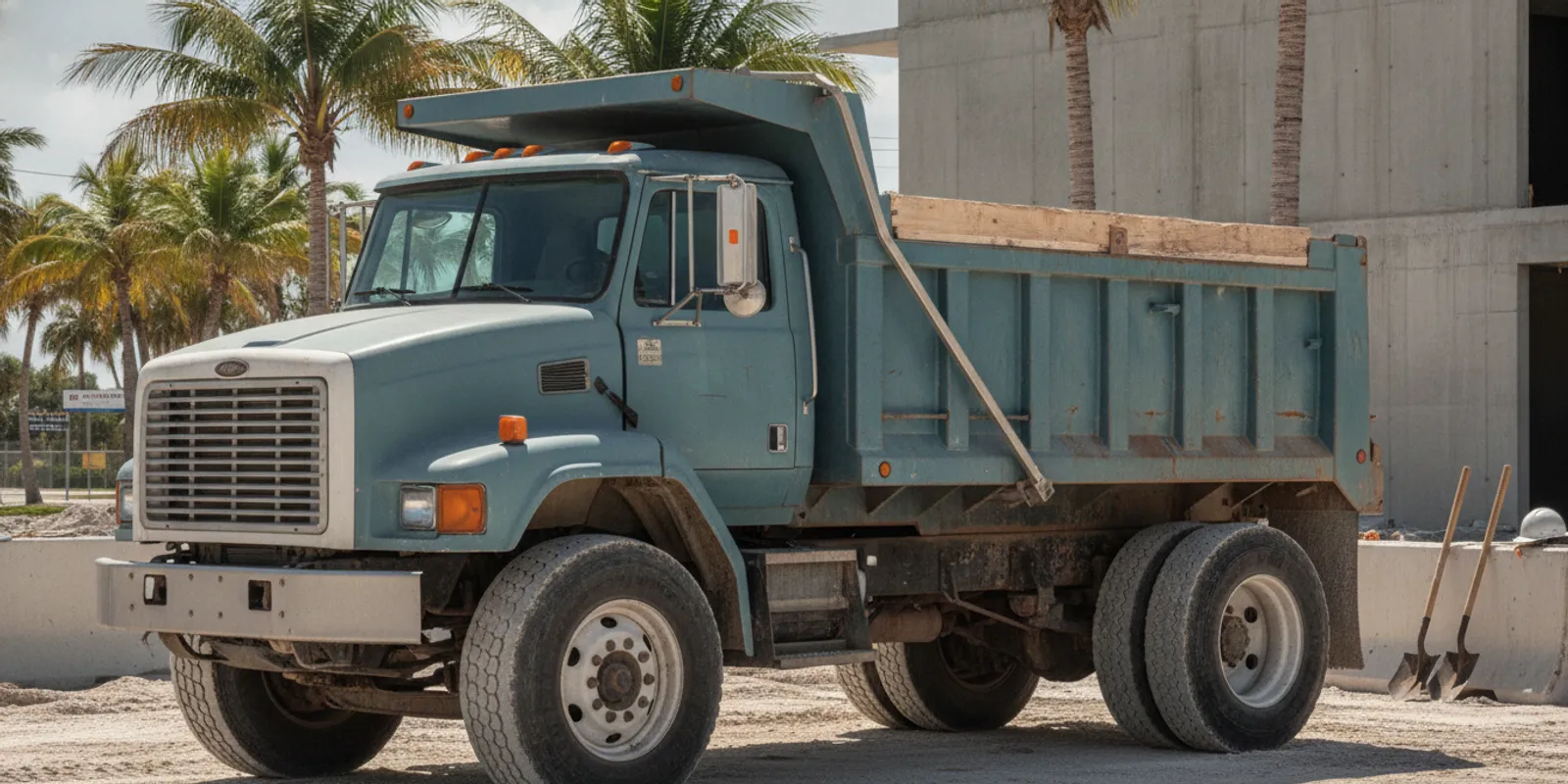
Understanding dump truck price means looking beyond the number on a listing. The right comparison depends on the truck’s configuration, body, powertrain, condition and fit for the work you need it to do. For buyers in Sanford and across Florida, a useful evaluation starts with the job, not a guess about what every truck should cost.
What makes used dump truck prices vary?
Two trucks that look similar in a photo can differ in important ways. Axle layout changes how a truck is configured for a load and route. Body length and construction affect how it fits the material and job. Engine, transmission, mileage, operating hours, service history and emissions-era design all shape the comparison.
That is why a single price benchmark can be misleading. Start by defining the work: what material will be hauled, how often the truck will run, where it will travel, and what loading and unloading conditions it will face. Then compare trucks with similar configurations and review the details that affect your operation.
It helps to think of the asking price as one part of a buying decision, not a complete measure of value. A truck that matches your routes and loading process may be a better operational fit than one with a superficially attractive listing but a body that will not work at your sites. Conversely, a more elaborate configuration may add little value for a business whose jobs do not require it. The useful question is not simply “Which truck costs less?” but “Which documented truck fits the work, and what will I need to confirm before deciding?”
How does axle configuration affect the comparison?
Single, tandem and tri-axle configurations are not interchangeable labels. They describe different arrangements that may suit different operating needs. A buyer should confirm the truck’s actual configuration and weight ratings in its documentation, then consider the routes, job sites and loading conditions involved. Do not assume that adding axles alone makes a particular truck the right choice.
| Configuration to compare | Questions to ask | Why it matters |
|---|---|---|
| Single axle | Does this setup suit the expected work and routes? | It may be appropriate for a different duty profile than a multi-axle truck. |
| Tandem axle | What are the documented ratings and intended application? | Configuration and ratings help determine whether it fits the planned operation. |
| Tri-axle | Can the truck access the work sites and meet route requirements? | More axles do not automatically mean a better fit; confirm dimensions and ratings. |
Ask for the specific ratings and verify them against your intended use. Rules and allowable loads can depend on the vehicle and where it operates, so consult the Federal Motor Carrier Safety Administration’s regulations and guidance for applicable federal requirements, and confirm state and local rules with the relevant authorities before purchasing or dispatching a truck. A compliance reference does not replace checking the vehicle’s documentation or the rules for the route.
Also consider where the truck must go between the loading point and the site. Turning room, road width, bridges, access gates and the space needed to position for unloading can all affect whether a configuration is practical. Make a simple route list before comparing candidates: regular public-road routes, recurring job locations and any restricted entrances. If a truck is expected to operate in several settings, assess the most restrictive routine site rather than assuming every job has the same access.
How do body length and material affect value?
Dump bodies vary in length, material and design. A longer body may offer a different loading capacity than a shorter one, but fit and safe operation matter more than choosing the largest body available. Consider the material you haul, the loader or other equipment used to fill it, and the space available for maneuvering and dumping.
Steel and aluminum bodies can differ in weight, durability considerations and intended use. Inspect the body for visible damage, corrosion, patches, worn hinges and signs of uneven operation. Ask how the body is controlled and whether the truck’s configuration matches the body. If a body change or custom setup is part of your plan, discuss the requirements before choosing a chassis.
Compare body dimensions and construction as documented, rather than relying on appearance alone. A truck with a body that does not suit your material or job-site limits can create compromises even if its asking price looks appealing. Also consider the entire loading and dumping cycle. A body that fits the loader but leaves little room for safe maneuvering at a tight site may slow the work. Note where the truck will be loaded, how it will reach the drop point, and whether there is adequate clearance to raise the body.
For example, a contractor who moves material from a confined urban site should think about turning space and the height available at the dumping point, not only body volume. An operator moving material between more open locations may weigh different constraints, such as the loader’s reach and the repeated loading cycle. These examples are prompts for evaluation, not a recommendation for a particular size. Take measurements where possible and confirm them against the truck’s published dimensions and the site conditions.
Look at the body as a working system. Check that the floor, sides, tailgate, hinges and visible hydraulic components appear consistent with the seller’s description, and note anything that needs a closer professional assessment. Ask whether the body and chassis details are documented together. If a body replacement or modification is being considered, establish what measurements and mounting requirements need review before treating the truck as a ready match.
What should you review about the engine and transmission?
Engine and transmission choices influence how a truck performs under the conditions you expect. Think about the terrain, typical load, stop-and-go work, travel distance and operator familiarity. Check the records for maintenance and repairs, and ask about any known issues or warning indicators. A test drive and an independent inspection can help assess a specific vehicle; neither should be replaced by assumptions based on make or model.
Mileage is only one part of the picture. For trucks with engine-hour information, ask how the hours relate to the truck’s use. A vehicle that spent substantial time idling or working at low speeds may have a different operating history than one used mainly on longer routes. Compare the available records and condition together.
Consider how the truck will be driven by the people who will operate it. A transmission familiar to your drivers may ease the transition, while the engine’s response and gearing should suit the terrain and load. These are operational questions, not a reason to assume a particular powertrain is universally superior. During an inspection, note any warning lights, smoke, unusual sounds, fluid leaks or inconsistent shifting, then ask a qualified inspector to assess concerns. Make a written list of questions so that condition observations are addressed before purchase rather than after the truck enters service.
Before a drive or inspection, write down what you want to observe. Does the engine start and run consistently? Are warning indicators present? Does the transmission shift as expected under the conditions tested? Are there visible leaks or unusual noises? A brief observation is not a diagnosis, but recording what you notice makes follow-up more precise. Share the list with the professional inspecting the vehicle and ask which findings need immediate attention, which need monitoring, and which require more documentation.
How do mileage, hours and records shape the decision?
Review the timeline, not just a single odometer reading. Look for dated maintenance entries, recurring work, major component repairs and gaps that you want explained. Records can help you understand how a truck was maintained, but they do not guarantee future performance. Ask what documentation is available for the particular vehicle and compare like with like.
For a closer look at what to check, read what truck service records should show. DeBary Truck Sales focuses on one-owner, fleet-maintained trucks and does not buy auction trucks; documentation can vary by vehicle, so review the available history for the specific truck rather than assuming every record is identical.
When reviewing records, match entries to the truck and its timeline. Ask whether dates, mileage readings and descriptions are consistent, and note work that appears repeatedly. A missing document does not by itself prove a problem, but it is a useful reason to ask for clarification. You can organize your notes by system—engine, transmission, brakes, tires, hydraulics and body—so the same areas are reviewed for every candidate. If an inspection identifies a repair or adjustment, consider how it affects your intended use and the full purchase decision.
A practical record review can be done in passes. First, confirm that the paperwork appears to refer to the same vehicle and that the dates and odometer entries form a sensible timeline. Next, group entries by system rather than reading them as an undifferentiated stack. Finally, mark questions: repeated work, a long gap, or a repair described without detail. Ask what documentation exists for those items and whether an inspector can evaluate them. This approach avoids treating a thick file as proof of condition or a thin file as proof of a problem.
Use a simple note format for each candidate: document or event, date and recorded mileage, system involved, question to resolve, and status. Mark each item confirmed, awaiting records, or requiring inspection. The same format for every truck makes comparisons more useful. If one candidate has more documentation, that is information to consider, but it does not eliminate the need to assess its present condition and suitability for your operation.
Why does the truck’s emissions era matter?
Emissions equipment and standards vary by model year and engine. The system on a truck can affect its operating requirements, maintenance considerations and suitability for the work or jurisdictions where it will run. Identify the engine and model year, ask what emissions equipment is present, and have a qualified professional evaluate questions about condition or compliance.
Do not compare trucks from different eras as if they were identical simply because their body size is similar. Consider where the truck will operate, the applicable rules, and the records for emissions-related work. When those factors are important to your business, verify them before making a purchase decision.
For a buyer, the practical first step is to identify the actual engine and model year from the vehicle information, then ask what equipment is fitted and what records are available for that system. If your planned operation crosses jurisdictions or involves particular access requirements, verify the relevant rules with the appropriate authority. Avoid relying on a broad statement such as “older” or “newer” as a substitute for checking the specific truck and its use case.
How can you compare two dump trucks fairly?
Build a short comparison sheet and use the same questions for each candidate. This makes it easier to identify meaningful differences instead of focusing on one headline detail. Record answers in a consistent format, and mark items as confirmed, pending documentation, or needing inspection. That distinction helps prevent an assumption from becoming a fact in your decision.
- Write down the job. Note the material, expected routes, site access and operating schedule.
- Record the configuration. Compare axle layout, documented ratings, body dimensions and body material.
- Identify the powertrain. Note engine, transmission, model year and any relevant emissions equipment.
- Compare usage. Record mileage and engine hours when available, along with the type of work described.
- Review documentation. Read available maintenance records and ask about gaps or recurring repairs.
- Inspect the actual truck. Check the frame, body, tires, controls and visible condition; consider an independent inspection.
- Compare the full purchase picture. Include any planned body work, transportation and financing considerations.
This process also helps a buyer avoid comparing a truck configured for one kind of work with a different truck that only appears similar in a listing. For businesses in Orlando, Daytona Beach, Kissimmee or Deltona, job-site access and local routes should be part of the comparison from the beginning.
It can help to separate must-haves from preferences. A must-have may be a documented rating or body dimension that your work requires. A preference might be a familiar transmission or a particular cab feature. If two trucks differ, first ask whether both can perform the essential work; only then weigh preferences and condition. This keeps a lower asking price or an attractive photo from distracting you from a mismatch that would matter every day.
Take the sheet on a viewing visit and leave space to note what remains unverified. For instance, if a listing states a body dimension but the documentation is not at hand, record it as pending rather than treating it as confirmed. If the truck looks suitable but a site has a low entrance or tight turn, measure the constraint and compare it to the vehicle dimensions. A few written checks can prevent an avoidable mismatch from being overlooked in a quick walk-around.
When evaluating candidates, compare them in the same order. Start with the job requirements, eliminate trucks that cannot meet essential constraints, and then look at condition and records. Next, review costs tied to the specific purchase, such as any work you plan to do, transport, or financing terms. This sequence is more disciplined than beginning with a listing price and trying to rationalize the truck afterward.
How does financing change the monthly picture?
A purchase price and a monthly payment answer different questions. Financing terms, down payment, loan duration and the buyer’s circumstances can affect the monthly amount. Do not assume that a displayed estimate applies to your situation or that financing will be approved. Ask for the actual terms and total obligations before making a decision.
When comparing a financed purchase with another option, consider the total cost over the term as well as the payment. You can review the dealership’s commercial truck financing information, then discuss the details that apply to your purchase. No rate or approval outcome should be assumed in advance.
For a useful comparison, write down the amount financed, any cash due at signing, the length of the term, the payment schedule and the total amount paid over the term. Then consider the truck’s expected role and how its costs fit your business plan. A payment alone can hide differences in term length or overall obligation. If you are comparing multiple trucks, use the same assumptions for each quote where possible, and ask the lender to explain fees and any conditions in writing. Do not rely on a general example as an offer for a particular buyer.
To keep the comparison clear, make a small worksheet with one row for each candidate and columns for purchase price, cash due, term, payment schedule, total obligation, and any work or transport you expect to arrange. Fill in only confirmed figures and label estimates clearly. If terms are not yet available, leave the cell open rather than inventing an amount. This makes it easier to see whether a monthly figure reflects a different term or down payment, and it keeps the truck’s condition and fit in view alongside financing.
What should a Florida buyer prepare before contacting a dealer?
Bring a clear description of the work and the configuration you believe you need. If you already operate trucks, note what works and what creates limitations. Identify any must-have body dimensions or route constraints, and gather questions about records, inspection and delivery. A focused conversation can help narrow the options without treating a general price range as a promise about a particular truck.
Before you reach out, gather practical details: the material, typical load, work-site access, expected travel distance and any timing constraints. If you have a truck to trade or sell, note its year, make, model and condition so you can ask what information is useful for an evaluation. Buyers can also review trade-in information as part of planning the transaction. Avoid sharing assumptions as confirmed specifications; bring documents or photos when appropriate to clarify the question.
DeBary Truck Sales is based in Sanford, Florida, and serves buyers in Florida and beyond. You can review the commercial inventory, explore dump truck listings, and see more about the dealership. Inventory and details can change, so confirm the current information for any truck you are considering.
Frequently asked questions
Can I use one average price to judge every used dump truck?
No. Configuration, body, powertrain, condition, records and emissions-era design can differ substantially. Compare trucks with similar features and verify details for each vehicle.
Is a truck with lower mileage always the better value?
Not necessarily. Mileage should be considered alongside engine hours when available, maintenance history, condition and how the truck was used. Review the available records and inspect the specific vehicle.
Should I choose the largest dump body I can find?
Choose a body that suits the material, loading equipment, truck configuration and work-site constraints. Larger dimensions alone do not establish that a truck is the right fit.
Can financing make a higher-priced truck the better choice?
It depends on the actual terms, total repayment, truck condition and your operating needs. Compare the full obligations and do not rely on a payment estimate without confirming its assumptions.
Contact DeBary Truck Sales to discuss your needs
A careful comparison of configuration, condition and documentation can help you focus on a dump truck that fits your operation, rather than judging the decision by price alone.


