

Truck Body Types for Business: Match the Job
Table of Contents
- What to Measure Before Choosing a Truck Body
- Record the cargo and loading method
- Map access, routes, and must-haves
- How Truck Body Types for Business Shape the Loading Workflow
- Rear and dock loading
- Side, ground, and top access
- Securement is part of the workflow
- Which Body Fits Enclosed, Open, or Temperature-Sensitive Cargo?
- Match Body Design to Routes, Sites, and Access
- When Chassis, Ratings, and Mounted Equipment Matter
- Check the working load, not just the empty body
- Account for equipment before selecting the body
- Body Materials, Climate, and Maintenance Reality
- When Custom Fabrication Can Close the Fit Gap
- When a cab-and-chassis conversation makes sense
- Frequently Asked Questions
- How do I choose a truck body for the way my business loads cargo?
- Does the truck body affect the chassis I need?
- When should a business consider a refrigerated body instead of a standard enclosed body?
- What should I verify before using a truck for interstate cargo work?
- Can a cab-and-chassis truck be adapted for a specialized application?
- Ready to Review Truck Body Options?
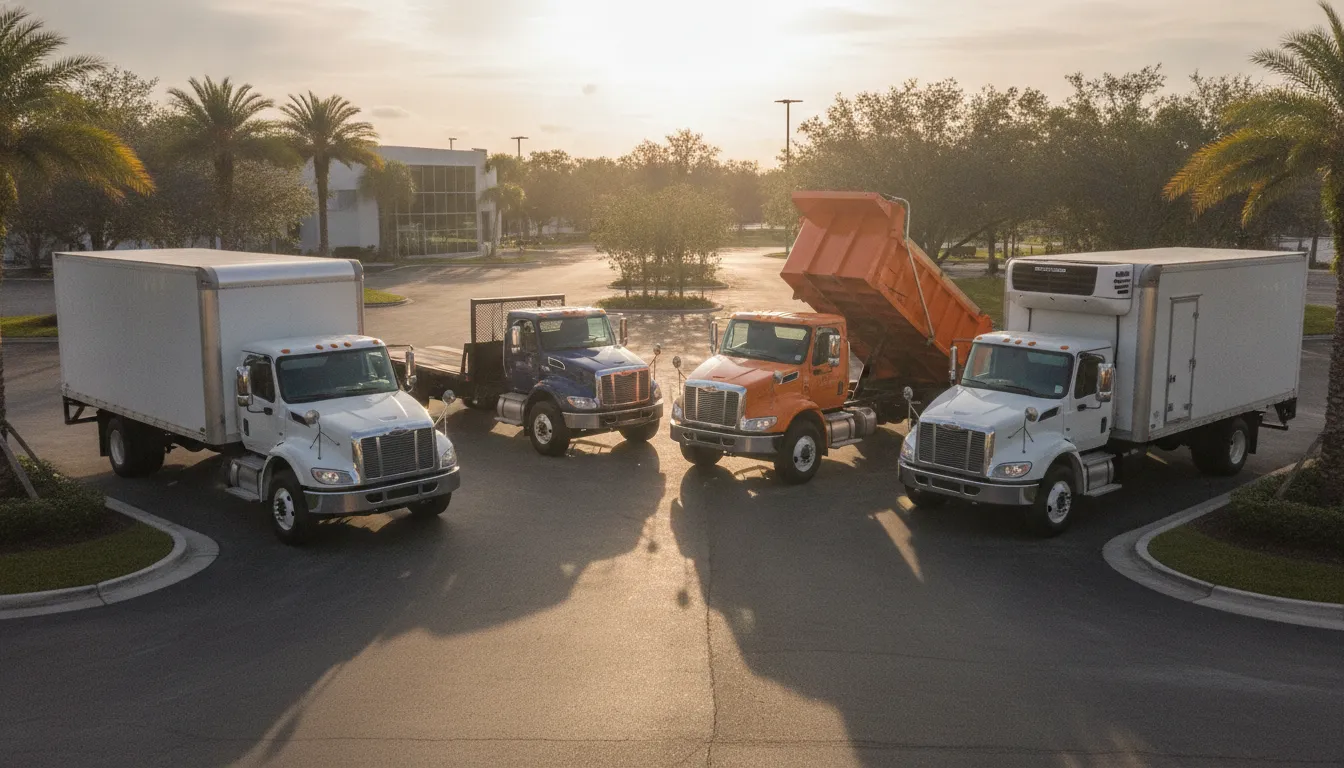
The right truck body is not chosen by appearance alone. It is chosen by how cargo moves through the day: where it is loaded. How it is secured, how often it is accessed, and what roads and work sites the vehicle must reach. A delivery operator, contractor, and regional hauler may need very different configurations even when their cargo weights look similar.
Review current commercial truck inventory for your business needs
The best truck body types for business are the ones that match the cargo, loading direction, route, access conditions, and equipment the job actually requires. Start with those operating details before comparing enclosed, open, refrigerated, dump, step van, or specialized body options.
That process also helps prevent a common mismatch: selecting a body first, then discovering that the openings, floor, clearance, or chassis do not support the work. Begin by measuring the demands your truck will face on a normal route and at the job site.
What to Measure Before Choosing a Truck Body
Start with the work, not the body label. A useful truck brief describes what the vehicle must carry, how loads move through the operation, and where the truck will work. Body selection should begin by defining the application, including the usual job, the busiest realistic day. And any occasional assignment that could change the configuration you need. application guidance also recommends calculating body dimensions from those application requirements rather than choosing a size first.
Record the cargo and loading method
Measure the largest regular items, their length, width, height, and weight, then note whether they arrive on pallets, rolls, skids, tools, loose material, or specialized equipment. Include the space needed around the cargo for safe handling. Ask whether loading happens from the rear, side, above, or at a dock. A load that fits inside a body on paper may still be difficult to place or remove if the door opening. Interior layout, or loading direction does not match the workflow.
Do not measure only the average load. Identify concentrated loads, such as dense equipment or construction materials, because concentrated weight can affect the body-floor material and construction. The exact truck's ratings and build still need to be verified before purchase.
Map access, routes, and must-haves
Write down dock height, ground-level access, overhead clearance, turning space, parking limits, and the surface conditions at job sites. Then separate requirements into three groups:
- Must-have: A feature the truck cannot operate without, such as a specific opening, body length, or loading arrangement.
- Strong preference: A feature that improves the work but has a practical alternative.
- Future possibility: A need that is not supported by current work volume or a confirmed contract.
This list gives sellers and inspectors something concrete to verify. It also helps prevent a visually appealing truck from replacing a configuration that actually fits the cargo, access points, route, and daily workflow.
How Truck Body Types for Business Shape the Loading Workflow
The right body should fit the way cargo moves through a workday, not just the kind of material being carried. Start with the loading direction: will workers use a dock, a rear door, a side opening, ground-level access, or a crane? Then consider how often the driver must enter the cargo area. Whether equipment needs to approach from one side, and how the load will be secured before the truck leaves.
Rear and dock loading
Enclosed bodies generally create a defined rear-loading workflow. That can work well when cargo is staged at a dock or moved with a pallet jack or forklift. It also gives the driver a controlled space for organized deliveries, but the rear opening and dock height become practical limits. Before choosing a truck. Compare the loading height with the facilities on the route and check whether the door area leaves enough room to handle the largest routine items.
Side, ground, and top access
Side access can reduce walking and repositioning when stops happen along a curb, at a job site, or beside a building rather than at a dock. Ground-level loading may be more useful when crews handle tools or materials manually. Open bodies can make access more flexible. A flatbed has a level bed without sides or a roof, allowing material to be loaded and unloaded by hand or crane from any direction. That flexibility is especially useful for oversized, unusually shaped products and construction materials. Learn more about flatbed loading access.
Securement is part of the workflow
Open access does not remove the need for a repeatable securement process. Crews should know where tie-downs, blocking, edge protection, and other equipment will be used before loading begins. The Federal Motor Carrier Safety Administration states that motor carriers operating in interstate commerce must follow its cargo-securement requirements. Which are based on the North American Cargo Securement Standard Model Regulations. Review the applicable rules at the FMCSA cargo-securement resource, then verify the specific truck, cargo, and operating conditions with qualified personnel.
Which Body Fits Enclosed, Open, or Temperature-Sensitive Cargo?
The right choice among truck body types for business depends on what you carry, how it is loaded, and where the work happens. Use the table as a starting point, then verify the exact truck's body condition, dimensions, equipment, ratings, and configuration before buying.
| Cargo or work condition. | Loading and access considerations. | Body configuration to evaluate. |
|---|---|---|
| Packaged goods, furniture, appliances, or general deliveries that need enclosure | Rear access is common, with loading often coordinated around docks, ramps, or ground-level stops. Interior protection from weather can be important. | Box trucks are used for delivery, moving, and commercial transport. Check door design, interior dimensions, and any liftgate or shelving equipment on the specific vehicle. |
| Long, wide, oversized, or unusually shaped materials, including construction products | Side access and overhead loading can simplify handling. Load securement and the worksite's available equipment remain essential. | Flatbeds provide an open platform without sides or a roof. They can support hand or crane loading from different directions, subject to the truck's configuration and rated capacity. |
| Loose soil, mulch, aggregate, debris, or other material for construction and landscaping | The operation may require controlled unloading at a jobsite rather than repeated dock deliveries. Confirm the body mechanism and condition. | Dump trucks are associated with construction, landscaping, and hauling. The exact hoist, bed, and chassis details must be verified for the intended load. |
| Food, produce, pharmaceuticals, or other cargo requiring temperature management | Plan for loading duration, temperature control, cleaning, and access at each stop. A refrigerated body should not be treated as interchangeable with a standard enclosed body. | Refrigerated trucks may fit temperature-sensitive routes. Confirm the refrigeration system, insulation, controls, service history, and operating requirements on the individual truck. |
| Frequent local deliveries where drivers enter and exit repeatedly | Low-step access and an efficient path from the cab to the cargo area may matter more than maximum enclosed volume. | Step vans can suit route-based delivery work when their access, interior layout, and condition align with the operation. |
| Regional or long-haul freight, with or without a trailer | Route length, sleeping requirements, trailer connections, and the truck's intended duty cycle should guide the review. | Day cab or sleeper configurations may be appropriate for different route patterns. Verify the tractor's equipment, ratings, history, and compatibility with the intended trailer. |
| Work requiring a purpose-built body, mounted equipment, or an unusual commercial application | Start with the job requirements and identify what must be installed, changed, or accessed. Body and chassis compatibility should be reviewed together. | Specialized bodies or cab-and-chassis units can provide a foundation for custom commercial applications. DeBary also performs body modification work and offers liftgate sales, installation, and repair, subject to the specific project. |
These categories overlap. A fleet may need one enclosed body for protected deliveries and an open or specialized body for equipment or materials. Reviewing the cargo flow first helps narrow the field without assuming that a body type guarantees a particular payload or use.
Match Body Design to Routes, Sites, and Access
A truck that works well at a loading dock may be awkward on residential streets, crowded job sites, or routes with frequent stops. Before comparing body styles, map the actual operating environment. Note the typical road width, parking constraints, dock height, overhead clearance, turning space, and whether the driver loads from the rear, curb side, or multiple directions.
City delivery routes often reward easy maneuvering and fast entry and exit. A body that is too long for the parking pattern can turn every stop into a traffic problem. Step vans and other delivery-oriented configurations may suit work that involves repeated stops. While a different body may be more practical when each stop involves a larger load or equipment. The right answer depends on the route, not simply the number of seats or the visible size of the cargo area.
Job sites create a different set of demands. Construction and landscaping work may involve uneven ground, limited staging space, and materials that must be placed or unloaded where a dock is not available. Check whether the truck can approach the site, turn without excessive backing, and leave enough room for workers and equipment. Clearance matters at garages, loading canopies, tree-lined access roads, and older commercial properties. Parking also deserves attention when the vehicle must remain on site while work is underway.
Longer routes shift the focus toward loading security, driver workflow, and the relationship between the body, chassis, payload, and trailering needs. Those requirements should be considered together when selecting the chassis, rather than after the body has already been chosen. Mounted equipment such as a liftgate, ladder rack, crane, compressor, or trailering equipment can change usable space, weight, access, and maneuverability.
Finally, document the stop cadence. A truck making a few planned stops may tolerate a different loading setup than one that opens and closes its cargo area dozens of times each day. For interstate motor-carrier operations, review the applicable FMCSA cargo-securement requirements and verify that the completed configuration supports the required securement practices. Treat route maps, site measurements, and the intended work sequence as part of the truck specification.
When Chassis, Ratings, and Mounted Equipment Matter
A truck body is not an isolated purchase. Its weight, dimensions, and intended use must make sense with the chassis, the vehicle's gross vehicle weight rating (GVWR). Payload needs, and any trailer or equipment the truck will carry or pull. In the United States, truck classes are based on GVWR, so the class alone is not a substitute for reviewing the exact vehicle specifications. Treat the body and chassis as one working system.
Check the working load, not just the empty body
Start with the application. Estimate the cargo, tools, materials, occupants, fuel, and permanently mounted equipment that will be part of the normal operation. A body that appears to offer enough space may still be a poor fit if the combined operating weight leaves too little usable payload. If trailering is part of the job, review the truck, trailer, hitch, and connector ratings together. The components need compatible capacities, and the exact figures must be verified for the specific truck.
Account for equipment before selecting the body
Mounted equipment can change both the truck's weight and the way people use it. A liftgate may support ground-level delivery, while a ladder rack can keep long materials outside the cargo compartment. A crane, compressor, or trailering equipment may be central to a contractor's workflow, but each also needs appropriate mounting, clearance, and capacity checks. Ask where the equipment will sit, how it affects access, and whether it reduces available payload or cargo space.
Securement belongs in the design conversation as well. The Federal Motor Carrier Safety Administration explains that its cargo-securement requirements apply to motor carriers operating in interstate commerce. That is not a substitute for reviewing the rules applicable to your operation. But it is a useful reminder to plan tie-down points, blocking, and working access before the body is chosen. See the FMCSA cargo-securement rules for the authoritative requirements.
When comparing flatbed trucks for accessible cargo loading or another body type, verify the exact chassis, ratings, dimensions, equipment, and condition with the seller. Those details determine whether the truck supports the work safely and efficiently.
Body Materials, Climate, and Maintenance Reality
Material choice is not just a design preference. It should reflect the region where the truck works, the exposure it will face, and the kind of cargo and equipment it carries. A vehicle operating around Central Florida may encounter heat, heavy rain, humidity, and frequent outdoor loading. A truck working in another climate may face different demands. The right question is how the body has been used and maintained, not which material sounds best in the abstract.
Concentrated loads deserve particular attention. Pallets, machinery, tools, building materials, or other dense cargo can place stress on a small area of the floor. That load pattern can affect the floor material and the body's construction, so inspect more than the outside panels. Look for floor deflection, damaged seams, patched areas, corrosion, water intrusion, and repairs around mounting points. The exact vehicle's floor design and condition must be verified before purchase. cargo concentration can influence body-floor material and construction.
Climate also changes the maintenance reality. Check exposed fasteners, hinges, latches, underbody areas, door frames, and body-to-chassis connections for corrosion or deterioration. On an enclosed body, inspect the roof, seals, and interior for signs of leaks. On a flatbed or service body, examine tie-down points and equipment mounts for wear. These checks do not replace a qualified inspection, but they help connect visible condition to the truck's intended work.
Finally, compare the body's condition with your expected lifecycle. Payload, trailering needs, body dimensions, and equipment all inform chassis selection. So verify the ratings and configuration for the specific truck rather than assuming a body type fits every application. When reviewing available commercial truck bodies, ask for the vehicle history, maintenance records, and current equipment details. That evidence is more useful than a general label when deciding whether the truck can support your operation over time.
When Custom Fabrication Can Close the Fit Gap
Sometimes the right answer is not choosing a different body from a standard list. It may be starting with a cab-and-chassis unit and discussing whether a commercial body or equipment arrangement can be adapted to the work. This is useful when the available truck is close to the operational need. But its current body, access arrangement, or loading equipment does not align with how the business works.
For example, a contractor may need a work-focused body arrangement rather than a general cargo box. A delivery operation may need better loading access. A fleet replacing a worn or unsuitable body may need to understand whether body removal and replacement is practical for the specific chassis. These are fit questions, not assumptions that every truck can support every modification. The truck's configuration, condition, dimensions, and intended use must be reviewed before anyone commits to a plan.
When a cab-and-chassis conversation makes sense
DeBary Truck Sales lists cab-and-chassis units as a foundation for custom commercial applications. That can give a buyer a starting point for discussing the body needed for the job instead of forcing the operation into a configuration that does not match its workflow. The appropriate path depends on the individual vehicle and the proposed use, so ask for a vehicle-specific review of what is feasible.
Body modification work may also be relevant when an existing truck needs a more practical arrangement. DeBary's in-house shop performs body modification work that can include landscape ramps, shortening van or flatbed bodies, new chassis installation, and body removal or replacement. The shop also offers new and used liftgate sales and installation, along with liftgate repair. Those services can matter when loading height, access, or equipment condition creates a recurring operational problem.
To explore whether a near-fit truck has a workable path forward, review DeBary's custom truck body work information and discuss the exact vehicle and application with the dealership. A modification conversation should clarify the desired outcome without treating the work as guaranteed for every truck.
Frequently Asked Questions
How do I choose a truck body for the way my business loads cargo?
Start with the application, then map the loading sequence. Note cargo dimensions, weight distribution, loading equipment, dock or ground access, and whether workers need access from the side, rear, or all directions. A flatbed can be practical for oversized or unusually shaped materials because it has no sides or roof and can be loaded from multiple directions. Verify the exact bed dimensions and equipment on the individual truck.
Does the truck body affect the chassis I need?
Yes. Body dimensions, expected payload, trailering needs, and permanently mounted equipment all influence chassis selection. Liftgates, ladder racks, cranes, compressors, and other equipment add requirements beyond the body itself. Confirm the vehicle's GVWR, axle ratings, body weight, and equipment configuration together rather than selecting a body in isolation.
When should a business consider a refrigerated body instead of a standard enclosed body?
Consider a refrigerated body when the cargo must remain within a controlled temperature range during the route. A standard enclosed body can protect cargo from weather and handling exposure, but it does not automatically provide temperature control. Define the cargo's operating requirements first, then verify the refrigeration system, insulation, service history, and current condition of the specific truck.
What should I verify before using a truck for interstate cargo work?
Review the truck's ratings, body condition, tie-down points, and loading plan before putting it into service. Motor carriers operating in interstate commerce must follow federal cargo-securement requirements. The FMCSA cargo-securement rules are a useful starting point, but the exact operating situation may require additional review.
Can a cab-and-chassis truck be adapted for a specialized application?
It may be a suitable starting point when a standard body does not match the work. Cab-and-chassis units provide a foundation for custom commercial applications, and body modifications can address needs such as ramps, body changes, or liftgate installation. Discuss the intended cargo, dimensions, equipment, and ratings before deciding whether modification is practical for the specific vehicle.
Ready to Review Truck Body Options?
The right body should support your cargo, loading process, routes, and equipment needs. DeBary Truck Sales can help you review available commercial truck options with those operating requirements in mind. To get started, review the current commercial truck inventory and contact the team about the body configuration that fits your operation.


