

Commercial Truck Depreciation: What Owners Should Understand
Table of Contents
- What does commercial truck depreciation mean?
- Why should a business pay attention to depreciation?
- How does tax depreciation differ from resale value?
- Which factors influence a truck’s market depreciation?
- Age, mileage, and operating hours
- Condition and maintenance history
- Truck type, body, and configuration
- Market demand and regional needs
- History and confidence in the vehicle
- How can you estimate commercial truck depreciation?
- How do truck types affect depreciation comparisons?
- What records help when buying, owning, or selling?
- How should you compare keeping a truck with replacing it?
- How should depreciation fit into a purchase or replacement decision?
- Frequently asked questions
- Does a commercial truck lose value by the same amount each year?
- Can I use a truck’s tax depreciation to work out its resale price?
- Does a well-maintained truck always depreciate less?
- How often should a business update its resale estimate?
- What should I do before claiming a tax deduction for a truck?
- Ready to compare commercial trucks?
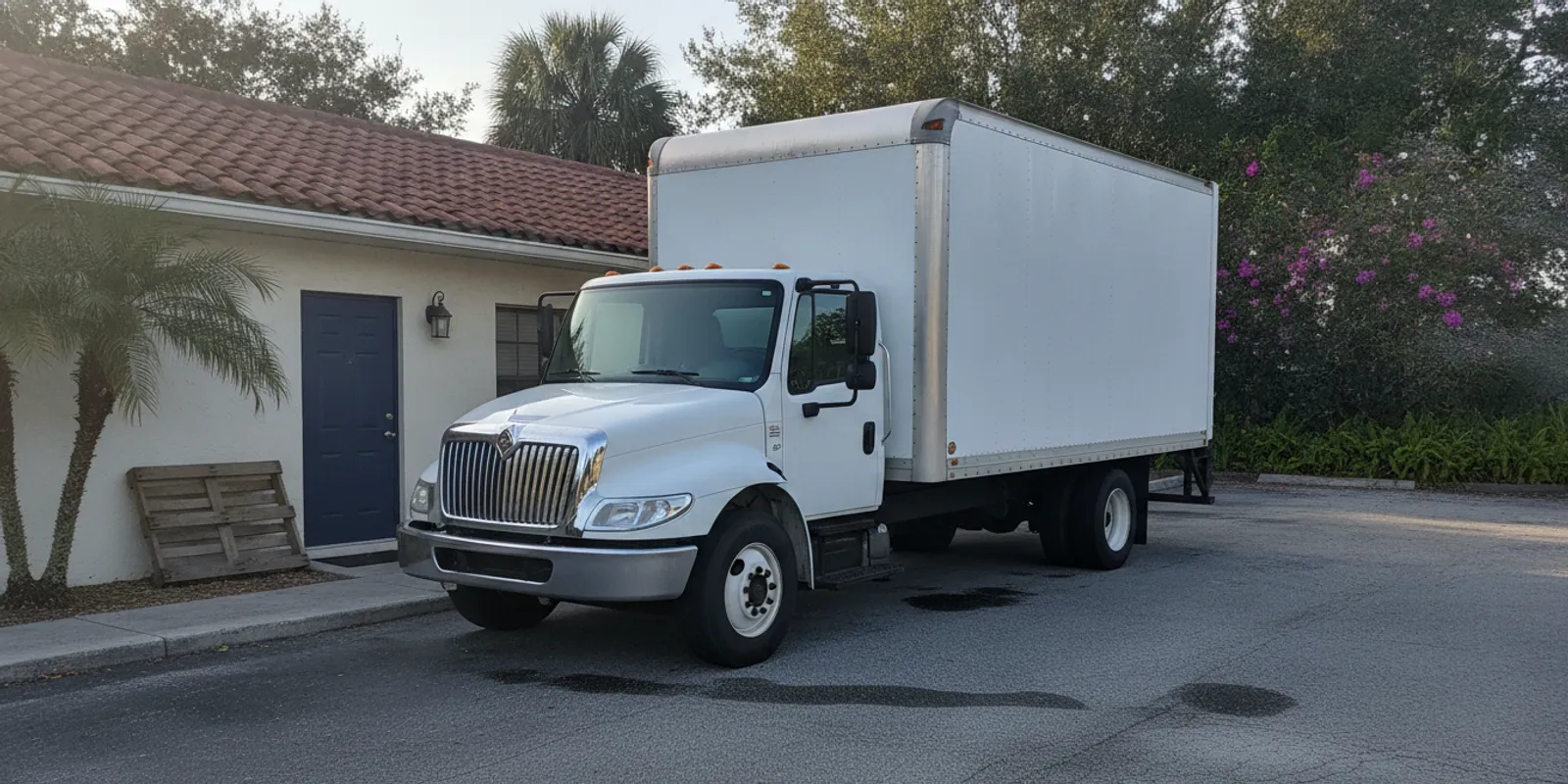
Commercial truck depreciation affects more than a line on a tax return. It can shape the true cost of owning a work vehicle, the timing of a replacement, and the amount a business may recover when it sells. Understanding commercial truck depreciation starts with separating tax treatment from the truck’s changing market value.
What does commercial truck depreciation mean?
Depreciation describes a decline in an asset’s value over time. In everyday conversation, it usually means the difference between what a truck could sell for when new or newly purchased and what it may sell for later. In accounting and tax work, depreciation has a more specific meaning: a method of allocating an asset’s cost over time under applicable rules.
Those two meanings are related, but they are not interchangeable. A truck’s resale value may fall quickly or slowly depending on its condition, age, mileage, configuration, and demand. A tax depreciation schedule follows rules that may not match the truck’s actual sale price or market value in a given year.
This distinction matters when comparing vehicles or planning a replacement. A business may have recorded a certain amount of tax depreciation while the truck’s current market value is higher or lower than its remaining book value. Neither figure, by itself, tells you what a buyer will pay.
Why should a business pay attention to depreciation?
A work truck is both a tool and a major business asset. Depreciation helps owners think beyond the purchase amount and consider how much value could remain after years of use. It can make a big difference when comparing two trucks that seem similar at first glance.
- Replacement planning: An estimate of resale value can help a business plan when to replace a vehicle and how much cash may be available for its next purchase.
- Fleet decisions: Comparing the expected value over a planned ownership period can help managers evaluate different body styles, sizes, or vehicle ages.
- Operating cost estimates: Purchase cost minus expected resale proceeds is one part of ownership cost. Fuel, insurance, maintenance, downtime, financing, and upfitting are separate considerations.
- Financial records: Accounting depreciation can affect reported expenses and asset values. Tax depreciation may follow separate rules.
- Resale discussions: Knowing the vehicle’s condition, history, and comparable market options can support a more grounded value estimate.
Depreciation is not a promise that a truck will lose a set percentage each year. It is a planning concept. A specific vehicle can perform differently from a broad estimate, particularly when its body, equipment, condition, or intended use is unusual.
How does tax depreciation differ from resale value?
For tax purposes, depreciation is governed by tax rules, not by the amount a seller happens to offer for a truck. The vehicle’s business use, classification, purchase and service dates, and the taxpayer’s circumstances can affect how the rules apply. Tax accounting can also differ from the way a business presents depreciation in its financial statements.
The IRS’s Topic no. 510, Business use of car discusses business-use vehicle deductions and depreciation. Its scope and rules should not be assumed to cover every commercial truck in the same way. A truck’s design, weight classification, use, and ownership circumstances can matter. Ask a qualified tax professional how the rules apply to the specific vehicle and business rather than relying on a generic online example.
Keep tax questions separate from the vehicle’s likely selling price. For a resale estimate, buyers and sellers look at evidence from comparable trucks and the specific truck’s condition. For a tax deduction, use the applicable tax rules and documentation. One number does not automatically determine the other.
Which factors influence a truck’s market depreciation?
There is no single formula that accurately predicts every truck’s value. Several factors work together, and their importance changes with the buyer and application.
Age, mileage, and operating hours
Age gives a broad signal about how long a truck has been in use, but the odometer alone does not tell the whole story. A vehicle that accumulated miles in steady highway operation may have a different wear pattern from one that spent long periods in stop-and-go work. For some vocational vehicles, engine hours or equipment use may also be relevant. Review the available records and inspect the actual vehicle instead of treating one reading as a complete history.
Condition and maintenance history
Visible wear, mechanical condition, tires, cab condition, body integrity, and signs of repairs can influence a buyer’s assessment. Documentation can make the history easier to understand. Maintenance records do not guarantee a particular value, but they can help a prospective buyer evaluate how the truck was cared for and what questions remain.
Truck type, body, and configuration
A truck’s usefulness depends on the work it can perform. A 26-foot box truck, a refrigerated truck, a step van, a day cab, a flatbed, and a dump truck serve different jobs. Specialized bodies or equipment can appeal strongly to buyers who need that configuration, while narrowing the group of potential buyers who want it. The right comparison is usually a similar truck configured for a similar application, not simply any truck of the same make.
Market demand and regional needs
Buyer demand can change over time. Businesses may be looking for a particular body style, capacity, or brand, while regional operating needs can make some configurations more useful than others. Florida businesses, for example, may compare vehicles based on the routes and work they need to cover. Do not assume that one local listing or one national estimate represents the value of every truck.
History and confidence in the vehicle
Ownership history, available records, and the ability to inspect a truck can affect how confidently a buyer evaluates it. A clear history can reduce unanswered questions. It does not remove the need to assess the specific vehicle, and no history document substitutes for an inspection appropriate to the purchase.
How can you estimate commercial truck depreciation?
A useful estimate begins with a specific vehicle and a defined time horizon. Avoid choosing a generic percentage before deciding what truck you are comparing, how long you expect to keep it, and what evidence supports the estimate.
- Write down the purchase basis. Record the amount paid and identify what is included. Keep vehicle and equipment details clear so later comparisons use the same basis.
- Define the ownership period. Estimate when the business might sell or replace the truck. A one-year estimate and a five-year estimate answer different questions.
- Describe expected use. Note the kind of work, routes, annual mileage or hours, and any planned body or equipment changes. Treat these as assumptions, not promises.
- Find comparable vehicles. Look for similar age, make, model, body, configuration, condition, and usage. Asking prices are not confirmed sale prices, so use multiple comparisons and allow for differences.
- Estimate a reasonable resale range. Use the comparisons to set a cautious range rather than pretending to know an exact future price. Explain why the high and low ends differ.
- Calculate expected value loss. Subtract the estimated resale proceeds from the purchase amount. Divide by the planned ownership period only if an average annual figure will help your internal comparison.
- Run a sensitivity check. Recalculate using a lower resale estimate and a longer ownership period. If the purchase only works under the most optimistic assumptions, revisit the plan.
- Revisit the estimate. Update it as the truck’s condition, business needs, and comparable market options change.
For a simple illustration, imagine a business buys a truck for $48,000 and estimates that it could sell for between $26,000 and $32,000 after four years. The estimated value loss is a range of $16,000 to $22,000 across that period. Dividing by four gives a rough average of $4,000 to $5,500 per year, but it does not mean the truck will lose that amount evenly each year. The calculation also leaves out financing, operating costs, taxes, and any equipment additions. These hypothetical figures show the arithmetic only; they are not a market estimate for a particular truck.
For example, suppose a company is comparing two trucks for a delivery route. It should compare both vehicles using the same planned ownership period, expected use, body requirements, and resale assumptions. If one truck costs less at the outset but has a configuration that is harder for that company to use or resell, the initial price alone will not settle the decision. The example is a decision framework, not a depreciation rate or a forecast for any particular vehicle.
How do truck types affect depreciation comparisons?
Vehicle type changes what counts as a useful comparison. A truck intended for general freight will not necessarily have the same buyer pool as a specialized vocational unit. Start with the job the truck must perform, then compare it with vehicles a future buyer might realistically consider.
| Truck type | Useful comparison points | Questions to ask about future value |
|---|---|---|
| Box truck | Body length, door and loading setup, chassis, condition, and intended route | Does the body suit common delivery work, and what condition is it in? |
| Refrigerated truck | Truck configuration, refrigerated body and equipment details, records, and condition | Can a buyer verify the equipment details and assess its condition? |
| Step van | Access and layout, route use, vehicle condition, and available history | Does the layout fit the likely buyer’s daily operation? |
| Flatbed or dump truck | Body and equipment configuration, wear, use, and maintenance documentation | Is the setup suitable for the work a future buyer needs to do? |
| Day cab or sleeper truck | Configuration, operating history, condition, and intended route or haul | Does the cab and equipment match the next operator’s requirements? |
This table is a starting point, not a valuation guide. Two trucks in the same category may still differ substantially in condition, specifications, history, and demand. Compare the vehicle details before treating the asking prices as equivalent.
If you are narrowing options, browse relevant box trucks, day cab trucks, or dump trucks and compare the actual vehicles that fit your work.
What records help when buying, owning, or selling?
Good records make it easier to explain the truck’s condition and to revisit the assumptions behind a value estimate. Keep records organized from the beginning rather than trying to reconstruct the vehicle’s story at sale time.
- Purchase documents and a record of the truck’s identifying details.
- Maintenance, repair, and inspection documents that are available to you.
- Odometer readings and, where relevant, operating-hour records.
- Details of body equipment, modifications, and major component changes.
- Photos that show the truck’s condition over time, including the body and cab.
- Business-use and tax documentation requested by your tax professional.
- Notes on the date and source of market comparisons used in a resale estimate.
Separate original records from your own estimates. For example, label a market comparison as an asking price and record the date you viewed it. Do not present an estimate as a verified sale amount. If the truck is being sold, complete and accurate descriptions help buyers understand what they are evaluating.
How should you compare keeping a truck with replacing it?
A resale estimate is useful only when paired with the cost and practical effect of the alternatives. Before deciding to replace a truck, write down what keeping it is likely to require over the same planning period. Include expected operating expenses, scheduled work, likely repairs based on what you know, and the business cost of downtime. Do not treat a possible repair as certain, but do not ignore a known issue simply because it has not happened yet.
Then compare that plan with a replacement option. Consider the purchase amount, financing terms if applicable, setup or body requirements, and a reasonable resale range at the end of the new ownership period. Use the same time frame for both choices. If keeping the current truck for one year is compared with buying a replacement and holding it for five years, the numbers do not answer the same question.
A short worksheet can make assumptions visible. List the current truck’s estimated sale proceeds, costs of keeping it, and operational limits in one column. In another, list the replacement’s purchase and expected ownership costs, potential downtime, and estimated future resale range. Identify which inputs are documented and which are estimates. This helps the business see whether the decision depends mainly on vehicle condition, replacement cost, capacity, or uncertainty about the market.
For a small fleet, repeat the comparison vehicle by vehicle instead of applying one average to every unit. Trucks with different bodies, routes, usage patterns, and histories may have different replacement priorities. A consistent worksheet lets managers compare those differences without pretending that every truck follows the same value curve.
How should depreciation fit into a purchase or replacement decision?
Depreciation is one element of the ownership picture, not the whole decision. A truck that retains value well may still be the wrong fit if its body or configuration cannot handle the work. A vehicle with a lower expected resale value might still make operational sense if it meets a specific need and the total costs are understood.
Before buying, list the work requirements first: payload and body needs, route conditions, access, daily use, and the time frame for replacement. Then compare trucks that meet those requirements. Use a realistic resale range alongside purchase cost, financing, expected operating expenses, and the potential impact of downtime. This makes it easier to see where a difference in value retention matters—and where it does not.
For a purchase involving financing, review the terms for the specific transaction instead of assuming depreciation determines a monthly payment or approval. You can review the dealership’s commercial truck financing information as one step in exploring a purchase. For tax treatment, speak with a tax professional who can consider the business and vehicle details.
If you already own a truck, compare the cost and practical effect of keeping it with the cost and capabilities of replacing it. A trade-in or sale may be part of that decision; an estimate should account for the vehicle’s actual condition and available history. DeBary Truck Sales provides information for owners considering a truck trade-in.
Ask about trucks for your business
Frequently asked questions
Does a commercial truck lose value by the same amount each year?
No. The change in market value is not necessarily even from year to year. Condition, use, configuration, records, and buyer demand all affect an individual truck. Tax depreciation follows applicable rules and may not match the market’s change in value.
Can I use a truck’s tax depreciation to work out its resale price?
No. Tax depreciation and resale value answer different questions. The tax figure is determined under tax rules, while resale value depends on the specific truck and market evidence. Keep the calculations separate.
Does a well-maintained truck always depreciate less?
Not always, and there is no guaranteed value outcome. Maintenance records and condition can help a buyer assess a truck, but age, configuration, operating history, and demand also matter. Evaluate the whole vehicle.
How often should a business update its resale estimate?
Review it when making a purchase or replacement decision and when a material change occurs, such as a change in condition, business use, or market comparisons. A current estimate is more useful than carrying an old assumption forward without checking it.
What should I do before claiming a tax deduction for a truck?
Keep the purchase and business-use records your tax professional requests, and ask how the truck’s classification and use affect the treatment. IRS guidance on business-use vehicles is useful background, but it is not a substitute for advice based on your specific situation.
Ready to compare commercial trucks?
Build your shortlist around the job, then compare vehicle condition, records, configuration, financing needs, and a reasonable resale range. For buyers in Sanford, Orlando, Daytona Beach, Kissimmee, Deltona, and elsewhere in Florida, DeBary Truck Sales offers a range of commercial vehicles to consider, with buyers able to discuss their needs directly before deciding what fits.


