

Commercial Truck Body Dimensions: Planning for Loads and Access
Table of Contents
- Which commercial truck body dimensions should you measure?
- How do inside and outside measurements differ?
- How can you calculate whether your load will fit?
- What dimensions matter at the loading point?
- How do body styles change the measurement checklist?
- Which measurements should you compare before buying?
- How should you verify dimensions on the specific truck?
- What should your truck body measurement checklist include?
- How do financing and a current vehicle fit the plan?
- Frequently asked questions
- Is advertised body length the same as usable cargo length?
- Should I measure the cargo area or the door opening first?
- Can cargo volume alone tell me whether a truck will work?
- Can I use dimensions from another truck of the same model?
- Ready to compare a truck with your real requirements?
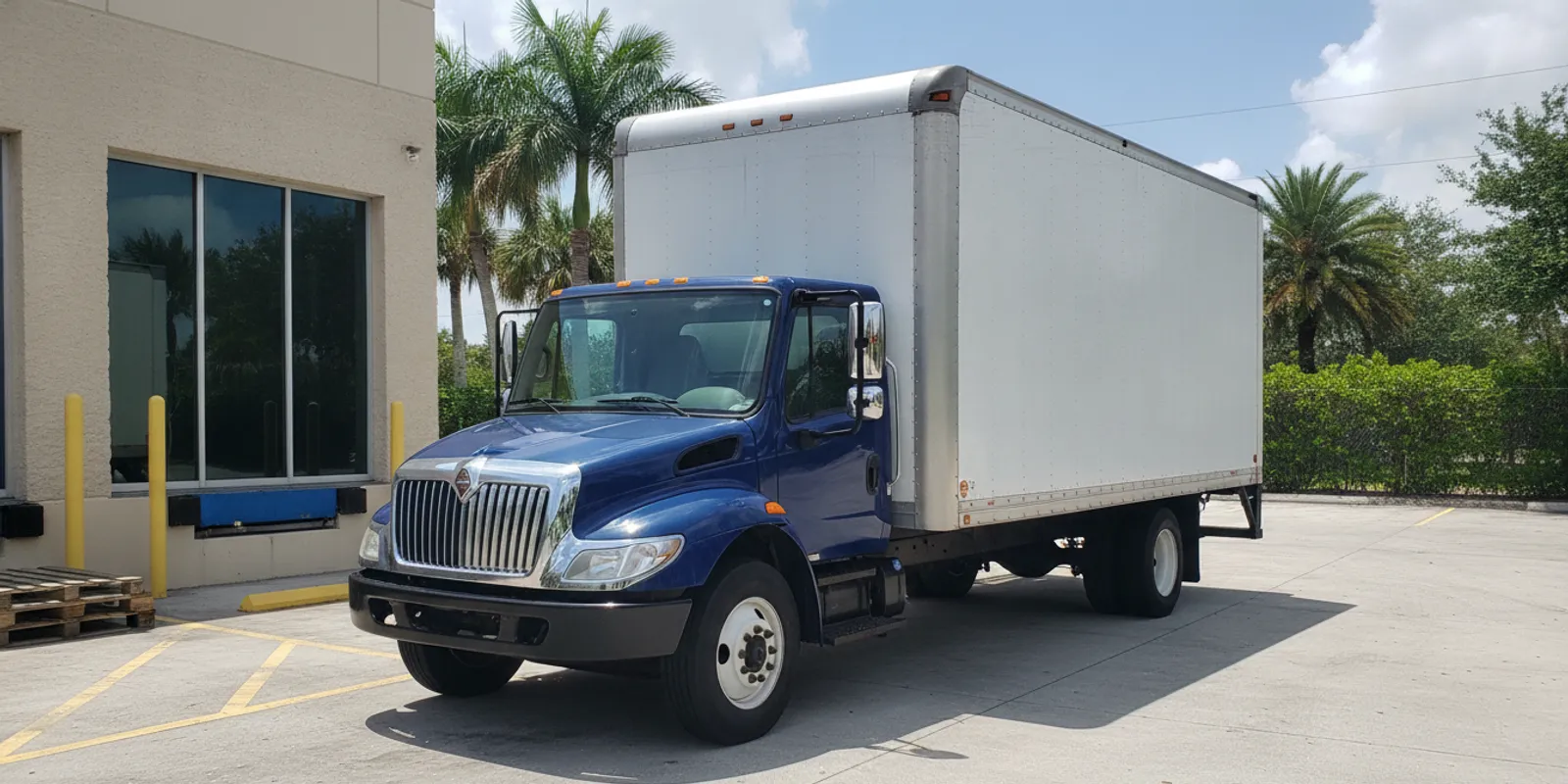
Choosing a commercial truck by its advertised length alone can leave important fit questions unanswered. Commercial truck body dimensions matter because your cargo, loading equipment, building openings, and regular routes all need to work together. Before you shop, write down what must fit and where the truck must go, then verify the measurements on the specific vehicle you are considering.
Talk with the sales team about your truck needs
Which commercial truck body dimensions should you measure?
Start with the cargo body, not just the truck’s overall length. A body’s outside measurements describe the space it occupies. Inside measurements describe the cargo area available after accounting for the floor, walls, roof, and doors. Those numbers are not interchangeable.
Ask for measurements in consistent units and clarify exactly where each measurement begins and ends. For cargo space, the useful measurements usually include:
- Interior length: The usable distance from the inside of the front wall to the closed rear door or other limiting point.
- Interior width: The narrowest usable side-to-side distance. Check between wheel wells or other intrusions if they extend into the body.
- Interior height: The distance from the cargo floor to the lowest obstruction on the ceiling, not simply the outside roof height.
- Door opening width and height: The clear opening after accounting for the frame, door hardware, and any raised threshold.
- Floor height: The distance from the ground to the cargo floor, measured at the access point. This affects how goods are moved in and out.
Depending on the body and your work, also ask about the dimensions and position of side doors, ramps, liftgates, shelves, refrigeration equipment, tie-downs, and other features. A body can have a generous interior volume and still be a poor fit if the opening is too small for the largest item you carry.
How do inside and outside measurements differ?
Outside dimensions help you judge whether the vehicle may fit in a parking space, yard, loading area, or access lane. Interior dimensions help you plan the cargo. A quoted body length may refer to an outside measurement, so ask the seller to identify the measurement type before comparing vehicles.
Body walls, framing, door assemblies, and equipment take up space. The clear interior width can be reduced by wheel wells or other projections. The clear height can be reduced by ceiling components. The rear opening may be shorter or narrower than the body’s interior. Measure the smallest clear space that cargo must pass through, not just the widest point of the body.
For a practical comparison, make a simple sketch of the cargo area. Mark the interior length, narrowest width, lowest height, door opening, and any intrusions. Add the locations of equipment that cannot be moved. This turns a listing description into a set of checks you can compare against real cargo and site measurements.
How can you calculate whether your load will fit?
Measure the items you actually carry, including packaging, pallets, carts, or protective materials that occupy space. Record each item’s length, width, and height in the position it will travel. If a load can be rotated or stacked, note that separately rather than assuming it will fit in any orientation.
- List the largest individual items. Include the longest, widest, and tallest pieces, plus anything fragile or awkward to turn.
- Measure the complete handling unit. If items sit on a pallet, include the pallet. If a cart has handles or wheels that extend, include those too.
- Compare each item with the narrowest access point. Check the door opening as well as the cargo area. Allow for a safe, workable path through the opening.
- Plan the arrangement. Sketch how items sit on the floor. Leave room for load securement and access to items that must be unloaded first.
- Check the total load separately. Fit is not the same as carrying capacity. Review the truck’s rated limits and the load’s weight with the seller and the relevant vehicle information.
For example, a business carrying long boxed materials should compare the item length to usable floor length and consider whether the rear or side opening allows the materials to enter without difficult handling. A delivery operator with carts should compare cart width to the narrowest opening and interior passage. A contractor with equipment that needs to be unloaded at different stops should consider how the arrangement affects access, not just whether every item can be placed inside.
Do not rely on a rough volume calculation alone. Two loads with similar total cubic volume can have very different shapes. Long materials, tall equipment, and goods that cannot be stacked may need a body with different proportions. A quick sketch using actual item measurements often reveals a mismatch before you travel to inspect a vehicle.
Allow room for the way people handle the load, not only the dimensions of the object. A rigid item that is nearly as wide as the door may technically pass through on paper, yet be difficult to angle safely. Consider handles, straps, protective wrapping, and the space a person needs to guide it. If a load must be turned inside, mark the turning area in your sketch; a clear rectangle on the floor does not guarantee that a long item can rotate within it.
For mixed loads, plan a typical trip as well as the largest single item. Draw the floor as a simple grid, label the footprint of each pallet or cart, and mark the order in which goods are unloaded. This can show whether frequently delivered items would be blocked by cargo for later stops. If loads vary, keep separate sketches for the common configurations rather than designing the whole decision around an unusual maximum load.
What dimensions matter at the loading point?
The truck has to work at both ends of the trip. Measure the places where it will load, unload, park, and turn. A body that works for cargo may still create a problem if the complete vehicle cannot reach a regular dock or fit inside a storage area.
- Building and bay openings: Measure clear width and height, including low signs, pipes, beams, and door hardware.
- Dock or ramp height: Compare the loading surface with the truck’s floor height and the equipment your team uses.
- Approach and turning area: Note tight turns, gates, slopes, overhead branches, and room needed to back into a loading position.
- Side access: If staff load from the curb or work in confined yards, record the space needed to open a side door or deploy equipment.
- Parking and storage: Check the full vehicle dimensions, not just the body. Cab, chassis, mirrors, and any attached equipment also take space.
Use the tightest regular site as your test case. If a location has an overhead clearance limit, compare it with the truck’s actual overall height and allow for any equipment mounted above the body. If the truck must back to a dock, consider the approach space and door alignment as well as the body’s interior size.
Make the site check on the same route and access path the truck will use in practice. A tape measure can establish a doorway’s clear opening, but it will not show whether a truck can make a turn into it. Note where a driver must approach, whether the gate can fully open, and whether the vehicle has room to line up before backing. When a clearance is close, verify the measurement at the point where it is most restrictive and confirm the vehicle’s full height and width from its specific configuration. Treat uncertain clearances as questions to resolve before choosing, rather than assuming the truck can pass because a similar one did.
How do body styles change the measurement checklist?
Different commercial vehicles call for different checks. A box truck buyer may focus on clear interior length, width, height, rear opening, floor height, and wheel-well intrusion. A step van buyer may care more about standing and moving through the interior, side-door access, and how equipment fits along the body. For a refrigerated truck, account for the interior space taken up by the refrigeration system and inspect the specific body configuration rather than assuming it matches a standard cargo body.
For a flatbed, record deck length and width, deck height, and the usable space between any rails or other fixed features. A cab-and-chassis buyer planning a body installation should confirm the chassis configuration and the dimensions and placement needed for the intended body. If you are comparing available truck bodies, make sure the intended fit is confirmed for the particular chassis and application.
DeBary Truck Sales has a range of commercial vehicle categories, but specifications vary by individual vehicle. You can explore current box trucks, cab-and-chassis vehicles, and the broader commercial inventory as starting points. A category page does not replace confirming measurements on the specific truck.
Which measurements should you compare before buying?
Use the same measurement definitions for every vehicle. When a seller provides a number, ask whether it is interior or exterior, and whether it is measured at the narrowest point or at a more open section. Record the source and date of each measurement so you can follow up if a truck’s configuration changes.
| Measurement or check | What to confirm | Why it matters |
|---|---|---|
| Interior body length | Usable floor distance and any fixed obstruction | Confirms whether long cargo can fit in its planned position |
| Narrowest interior width | Clear width between walls, wheel wells, and equipment | Helps determine whether cargo, pallets, or carts can fit |
| Lowest interior height | Floor-to-lowest-ceiling point, including body equipment | Checks tall cargo and the space available for stacking |
| Rear or side opening | Clear opening width and height, plus threshold | Shows whether cargo can pass through the access point |
| Floor height and access equipment | Height from ground and the configuration of any access equipment | Helps plan loading and unloading at your sites |
| Complete vehicle height and length | Overall dimensions of the specific truck | Supports route, building, yard, and parking checks |
| Capacity information | Vehicle ratings and the expected loaded weight | Separates physical fit from the ability to carry the load |
This comparison is most useful when the information is tied to the exact vehicle, not a generic model description. Photos can help you understand the layout, but they cannot establish precise clearances. If a dimension determines whether the truck will work at your site, verify it directly before making a decision.
How should you verify dimensions on the specific truck?
Before you visit or make a decision, send the seller a concise list of the measurements that matter most. Mention the largest cargo item, the smallest loading opening, and any tight route or site clearance. Ask for measurements on the exact truck under consideration and clarify any figure that could be interpreted in more than one way.
At an inspection, bring a tape measure and your written list. Measure the cargo area and opening yourself where practical, then compare the numbers with the seller’s information. Check fixed features that reduce space, door operation, and access equipment. If the truck has a body or equipment configuration that is unfamiliar, ask how its dimensions were determined and whether records for the vehicle are available.
DeBary Truck Sales describes its inventory as one-owner, fleet-maintained trucks and notes that maintenance history is available for most trucks. Ask what information is available for the particular vehicle, and review the truck’s condition and records as part of the decision. A 90-day warranty is included at the advertised price according to the dealership’s approved positioning; ask the sales team to explain what applies to the specific vehicle and the written terms.
For technical context, a published study of truck load-body design and analysis illustrates that the body is an engineered part of a commercial vehicle. For a purchase, however, the dimensions that matter are the verified measurements and configuration of the individual truck and its intended application.
What should your truck body measurement checklist include?
Before comparing vehicles, prepare a short brief that captures the job in plain language. It should be specific enough to rule out a mismatch, but easy to update if your operation changes.
- List your largest cargo items and how they are packed or secured.
- Record the maximum cargo length, width, and height, including pallets or carts.
- Identify the smallest opening the load must pass through.
- Note the number and type of loading or unloading stops on a typical workday.
- Measure the tightest loading bay, gate, parking space, and overhead clearance.
- Describe any side access, ramp, liftgate, or specialized body feature the job requires.
- Separate cargo-space needs from weight and vehicle-capacity questions.
- Ask for interior, opening, floor-height, and overall vehicle dimensions for the exact truck.
- Confirm any critical measurement during an in-person inspection before purchase.
If several people will use the truck, ask drivers and loading staff to review the brief. They may know about a narrow delivery entrance, a cart that must stay upright, or equipment that needs to be reachable between stops. Their input can prevent a vehicle from looking suitable on paper but creating friction in daily use.
How do financing and a current vehicle fit the plan?
Dimensions help determine whether a truck can do the work, but they are only one part of the purchase. Compare the vehicle’s condition, available records, body configuration, and fit with your expected workload. Consider how the purchase fits your operating plan, too. DeBary Truck Sales provides information about commercial truck financing, and buyers with a current vehicle can ask about a trade-in. Ask the team about the options relevant to your situation rather than assuming terms or values in advance.
When comparing two trucks, write down the trade-offs instead of choosing by one measurement. One vehicle might provide more interior length while another has an opening or floor height that better suits your loading process. The right choice is the one that meets the essential cargo and access requirements without overlooking the vehicle’s condition and carrying limits.
Contact DeBary Truck Sales to discuss your dimensions checklist
Frequently asked questions
Is advertised body length the same as usable cargo length?
Not necessarily. Ask whether the figure is an interior or exterior measurement, and confirm the usable floor length on the specific vehicle. Fixed equipment or body features can reduce the space available for cargo.
Should I measure the cargo area or the door opening first?
Measure both. Cargo must fit through the opening as well as inside the body. Check the narrowest opening and any threshold or equipment that affects the path in.
Can cargo volume alone tell me whether a truck will work?
No. Volume does not describe the shape of the space or the dimensions of individual items. Compare item length, width, height, orientation, access, and weight requirements as separate checks.
Can I use dimensions from another truck of the same model?
Use them only as an initial reference. Bodies and equipment can differ, so verify critical measurements on the exact truck you are considering before purchase.
Ready to compare a truck with your real requirements?
Bring your cargo measurements, site clearances, and loading needs into the conversation. Confirm the dimensions and configuration of the specific vehicle so you can judge whether it fits the work your business needs to do.
Filed under: Blog


