

Cargo Trailers for Sale: Business Buying Guide
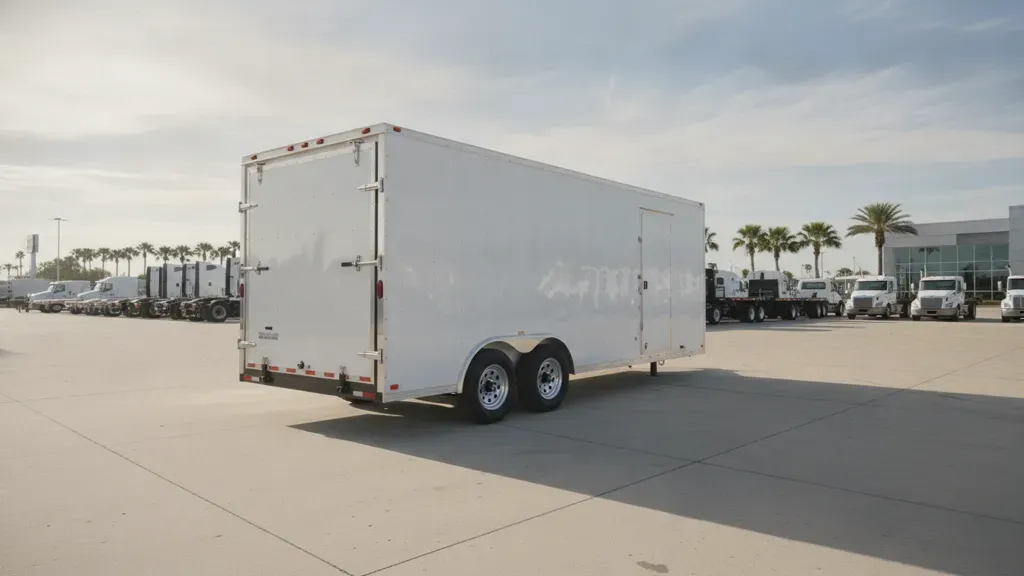
If you are searching for cargo trailers for sale, the right choice depends on more than the outside length or the lowest advertised price. A business trailer has to carry the equipment, inventory, tools, or materials your operation moves, while matching the tow vehicle, loading routine, storage needs, and budget. This guide explains the practical checks to make before you buy.
Start your search with DeBary Truck Sales commercial vehicle inventory and compare current options for your work.
What should a business cargo trailer do?
Short answer: A business cargo trailer should protect and organize the load you move most often, support safe loading and unloading, and stay within the ratings of the trailer and tow vehicle. The best match leaves enough usable payload for tools, materials, fuel, and normal growth without forcing your team to overload the equipment.
Start with the job, not the trailer. Write down what the trailer will carry on an ordinary workday and on the heaviest day you expect during the next few years. A contractor may need room for machines, hand tools, parts, ladders, and securement equipment. A delivery business may care more about protected floor space, shelving, easy access, and the ability to separate orders. A mobile service company may need a work-ready interior with organized storage.
That list gives you a more useful buying target than a generic request for a "large trailer." It also helps you avoid paying for space that will not improve your operation. At the same time, do not size the trailer only for today's smallest load if you already know your crew, service area, or equipment list is growing.
Think about the trailer as part of a system that includes the tow vehicle, hitch, tires, brakes, loading equipment, securement gear, storage location, and daily route. A trailer that looks suitable on a lot can become inefficient if the ramp is too steep, the door opening is too narrow, or the load cannot be positioned safely.
How do you choose the right cargo trailer size?
Short answer: Choose a cargo trailer size by measuring the largest items you will carry, allowing room for doors and loading paths, and planning where people will stand or work. Compare interior length, width, height, door opening, axle layout, and usable floor space rather than relying on the exterior dimensions alone.
Measure equipment in its real transport configuration. Include handles, attachments, racks, cases, spare parts, and anything that must stay with it. Then measure the access route: the trailer door opening, ramp width, interior height, and turning room. A piece of equipment that fits on paper may not load easily if the opening is tight or the ramp cannot handle the approach angle.
- Interior length: Check whether the longest item fits with room for securement and access.
- Interior width: Account for wheel wells, shelving, side doors, and equipment placed side by side.
- Interior height: Measure the tallest item, including racks, handles, or protective covers.
- Door opening: Compare the actual opening to the widest and tallest item you load.
- Ramp and floor: Confirm that loading equipment can enter without damaging the ramp or floor.
- Future capacity: Leave practical room for the tools and inventory you expect to add.
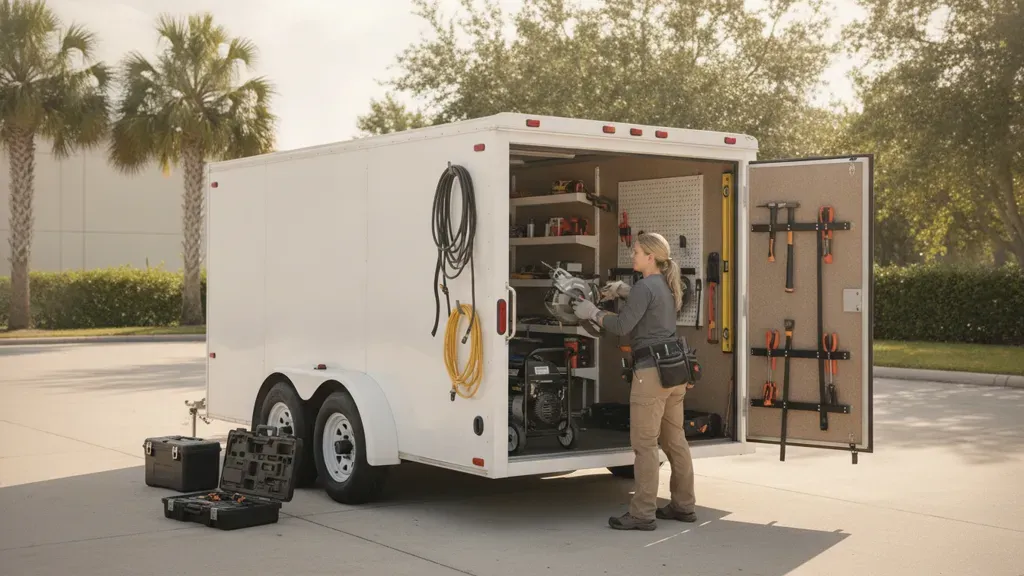
For a mobile workshop, usable layout may matter more than maximum volume. Shelving can make a smaller trailer more productive, but cabinets and work surfaces also add weight and reduce open floor area. Sketch the layout before you buy. Mark the door swing, aisle, shelving, generator or compressor location, and the space needed to handle the load.
DeBary Truck Sales serves businesses and buyers in Sanford, Orlando, Daytona Beach, Kissimmee, Deltona, and beyond. If you are comparing a trailer with a truck body or another commercial vehicle, review available used truck bodies as a separate option. The right solution may be a trailer, a truck, or a combination based on your routes and loading process.
What are GVWR, payload, and towing capacity?
Short answer: GVWR is the maximum permitted total weight of the loaded trailer as specified by the manufacturer. Payload is the weight of cargo the trailer can carry after accounting for the trailer itself and installed equipment. Towing capacity is a tow vehicle rating, but the hitch, axle, tires, brakes, and other limits also matter.
The basic payload calculation is:
Trailer GVWR minus actual empty trailer weight and installed equipment equals remaining cargo capacity.
Use the trailer's actual weight as equipped, not a base-model figure that excludes options. A spare tire, shelving, cabinets, racks, batteries, a winch, a ramp, and other additions all consume capacity. Your cargo list should include tools, fuel, securement equipment, packaging, and anything that travels with the trailer.
| Rating or measurement | Why it matters | What to verify |
|---|---|---|
| GVWR | Sets the maximum loaded trailer weight | Read the manufacturer label and confirm the planned loaded weight stays below it |
| Empty weight | Shows how much of the GVWR the trailer uses before cargo | Use the weight of the actual configuration, including installed options |
| Payload | Shows how much cargo remains available | Subtract the actual empty weight and account for all equipment carried |
| Axle and tire ratings | Limit how the load can be supported | Confirm ratings, condition, tire age, size, and load range |
| Hitch and coupler | Connect the trailer to the tow vehicle | Match the hitch, ball, coupler, safety chains, and wiring to the setup |
| Tow vehicle ratings | Determine whether the vehicle can tow and control the trailer | Check the vehicle, hitch, tongue weight, braking, and combined ratings |
Do not treat one rating as permission to ignore the others. A tow vehicle may have enough advertised capacity while the hitch, tires, tongue weight, or braking setup creates a different limit. Ask a qualified professional to review the complete combination when the load is heavy, concentrated, or unusual.
Which cargo trailer features help a business most?
Short answer: The most useful cargo trailer features are the ones that make your normal loading, unloading, storage, and securement routine faster and safer. Door configuration, ramp design, floor strength, tie-down points, lighting, ventilation, shelving, and service access should be selected around the work, not added simply because they appear on a feature list.
Consider these features in the context of your operation:
- Rear doors and ramp doors: A ramp can help with wheeled equipment, while barn-style or rear doors may work better where space is tight.
- Side access: A side door can reduce unnecessary unloading when you need one tool or case from the front of the trailer.
- Floor and wall protection: Match the floor surface and interior finish to moisture, dirt, sharp edges, and the type of load.
- Tie-down points: Place securement points where they can be used without blocking aisles or damaging the cargo.
- Lighting and visibility: Interior lighting and exterior visibility features can support early, late, or shaded loading conditions.
- Ventilation: Consider airflow if the trailer carries equipment that creates heat, fumes, or moisture. Follow product and safety guidance.
- Organization: Shelving, racks, cabinets, and labeled zones can reduce search time, but every addition affects weight and space.
- Spare and service items: Ask where the spare tire, jack, wiring, brakes, and other service points are located.
Do not add a permanent feature without considering how it affects the trailer's empty weight and balance. A well-organized interior can improve productivity, but it should not leave the trailer overloaded before the first job of the day.
Should you buy a new or used cargo trailer?
Short answer: New and used cargo trailers can both make sense. A new trailer may offer a configuration that closely matches your workflow, while a used trailer can provide value when its condition, capacity, and equipment fit your needs. In either case, inspect the complete trailer and verify the specifications before making a decision.
When comparing a used trailer, inspect the frame, floor, roof, walls, doors, hinges, seals, ramp, coupler, safety chains, wiring, lights, brakes, tires, wheels, and axle area. Look for water intrusion, uneven wear, bent components, poor repairs, corrosion, damaged flooring, and doors that do not close or seal correctly. Ask how the trailer was used and stored, but treat the physical inspection and documents as the evidence for your decision.
Review the identification plate and available records. Confirm the VIN, stated GVWR, axle ratings, tire information, and any modifications. If the trailer has shelves, ramps, cabinets, or other additions, include them in the actual weight and condition review. A clean appearance does not replace a careful inspection of the parts that carry, stop, and connect the trailer.
When you compare new and used options, compare the whole operating cost rather than only the purchase amount. Consider necessary repairs, replacement tires, registration, insurance, storage, maintenance, loading equipment, and the time your team spends working around a poor layout. The better value is the option that supports the work reliably and fits the tow vehicle you already have or plan to use.
How should you inspect a cargo trailer before buying?
Short answer: Inspect a cargo trailer from the ground up, inside and outside, then test the doors, lights, brakes, coupler, and other working components. Match the trailer's identification plate and documents to your planned load. If you cannot verify a safety-critical condition, get an independent inspection before purchase.
- Confirm the VIN and manufacturer information match the records and listing.
- Read the GVWR, axle, tire, and other rating labels before evaluating payload.
- Inspect the frame, crossmembers, axle area, coupler, jack, chains, and mounting points.
- Check the floor for soft spots, damage, water exposure, patching, and unsafe transitions.
- Open and close every door and verify the seals, hinges, latches, and ramp operation.
- Inspect tires for condition, visible damage, uneven wear, and appropriate load information.
- Test lights, wiring, brakes, breakaway equipment, and safety equipment with a qualified person.
- Check the interior layout, tie-down points, shelving, ventilation, and any added equipment.
- Confirm the tow vehicle, hitch, ball, wiring, braking, and tongue-weight setup are compatible.
- Calculate the expected loaded weight and leave a practical margin for normal cargo changes.
For commercial operations that move cargo on public roads, review the requirements that apply to your routes and load. The FMCSA cargo securement rules explain federal requirements for covered interstate commercial motor vehicles. The eCFR cargo securement regulations provide the regulatory text. These sources do not replace advice from a qualified safety or compliance professional who understands your operation.
DeBary Truck Sales can help you compare commercial vehicle options from its Sanford, Florida dealership, but every buyer should confirm that a specific trailer and tow combination is appropriate for the intended use. Ask questions early, bring your load measurements, and request documentation for any feature or modification that affects the buying decision.
How can you budget for a cargo trailer purchase?
Short answer: Build a cargo trailer budget around the complete cost of putting the trailer to work. Include the purchase amount, taxes and registration, financing, insurance, storage, maintenance, repairs, loading equipment, and interior setup. Compare the monthly obligation with the work the trailer is expected to support.
A purchase decision should not depend on a monthly payment alone. A longer term can change the total financing cost, while a lower down payment can change the amount financed. If you plan to finance a commercial vehicle, gather the information your lender requests and ask how term, down payment, credit, taxes, and fees affect the final structure. DeBary Truck Sales offers commercial truck financing information and an online approval path for buyers who want to explore next steps.
Also consider how the trailer affects revenue and operating time. Will it reduce trips, protect inventory, improve dispatch, or let a crew carry the equipment needed for more jobs? Those benefits should be measured against realistic use, not assumed. If a trailer will sit unused or require a tow vehicle upgrade, its actual business value may be different from the initial estimate.
Ready to compare your options? Browse current DeBary Truck Sales inventory, then contact the dealership with your intended load, tow vehicle, desired layout, and target timeline.
What should you ask a commercial vehicle dealer?
Short answer: Ask the dealer for the trailer's specifications, condition history, included equipment, known repairs, and compatibility details. Explain what you will carry and how you will tow it. Clear questions help separate a trailer that looks appealing from one that is ready for your actual business workflow.
- What are the VIN, GVWR, axle ratings, empty weight, and available payload details?
- Which equipment and modifications are included in the listed configuration?
- What should I know about the frame, floor, roof, doors, brakes, tires, and wiring?
- Has the trailer had water intrusion, structural repairs, or changes to the original configuration?
- Which tow vehicle, hitch, braking, and wiring setup does this trailer require?
- Can I inspect the trailer with my measurements and intended equipment list?
- What financing, trade-in, or selling options are available for my situation?
- Who can answer questions about fabrication or modifications if the standard layout is close but not exact?
DeBary Truck Sales also provides custom truck fabrication and modification services. Ask whether a modification is appropriate for the trailer and intended use, how it changes weight or capacity, and what documentation should be retained. Never assume that a custom change leaves the original ratings unchanged.
If a trailer is not the right fit, the broader commercial truck inventory may offer another way to move your equipment or inventory. The useful comparison is the one that matches the business process, not simply the product category used in a search query.
Cargo trailer buying FAQs
What is the first thing to check when buying a cargo trailer?
Start with the load and the tow vehicle. List the equipment, tools, materials, fuel, and securement gear you will carry, then compare the total loaded weight with the trailer, hitch, tire, axle, brake, and tow vehicle ratings. Check the trailer identification plate and use the actual configuration weight.
Is an enclosed cargo trailer useful for a small business?
An enclosed cargo trailer can be useful when a business needs protected storage, organized tools, mobile equipment, or a way to keep materials out of weather during transport. Its value depends on the work. Compare interior layout, access, payload, towing requirements, storage, and loading time before choosing one.
How much payload does a cargo trailer have?
Payload depends on the trailer's GVWR, actual empty weight, and installed equipment. Use the manufacturer's ratings and the trailer's real configuration rather than a generic size estimate. Shelving, ramps, cabinets, spare tires, and other additions reduce the capacity available for cargo.
Should I buy a new or used cargo trailer?
Either may be appropriate. A new trailer can offer a specific layout and equipment package, while a used trailer may fit the budget when its condition and ratings match the job. Inspect the frame, floor, roof, doors, tires, brakes, wiring, and documentation before committing to a used option.
Where can I find cargo trailers for sale near Sanford or Orlando?
DeBary Truck Sales is based in Sanford, Florida and serves buyers in the greater Florida area, including Orlando, Daytona Beach, Kissimmee, and Deltona. Inventory changes, so review the current commercial vehicle inventory and contact the dealership to discuss the equipment and configuration you need.
Make the next step practical: Learn more about DeBary Truck Sales, review the current inventory, and bring your load measurements and tow vehicle details when you are ready to compare options.


