

Bucket Truck 101: The Ultimate Buyer's Guide
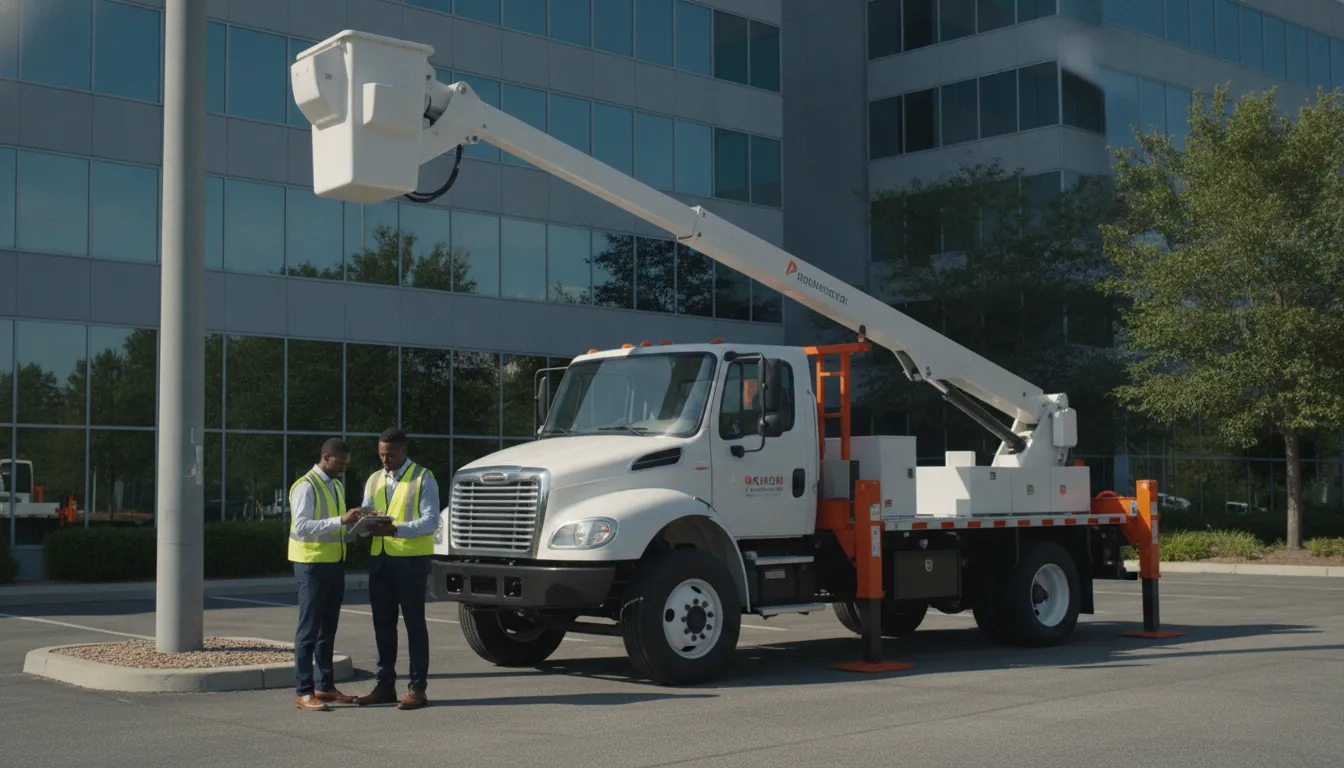
For many industries, working at height is a daily reality, but it doesn't have to be a daily risk. Using ladders or scaffolding for jobs like tree trimming, sign maintenance, or utility repair can be slow and dangerous. This is the exact problem the bucket truck was designed to solve. By providing a secure, mobile aerial platform, it transforms how work gets done, making your crew safer and more efficient. But with so many different models available, how do you find the right one? We’ll cover the key considerations to help you select the perfect bucket truck for your specific needs.
Key Takeaways
- Choose the right boom for the job: Select an articulating boom to maneuver around obstacles or a telescopic boom for maximum straight-line reach. Analyzing your typical job site is the best way to decide.
- Assess your complete operational needs: A truck's reach is important, but so are other factors. Evaluate the required platform capacity for your crew and tools, the chassis needed for your terrain, and the financial sense of buying new versus used.
- Make safety a non-negotiable habit: Protect your crew by choosing an insulated truck for electrical work, enforcing the use of proper fall protection gear, and conducting thorough daily inspections before every job.
What Is a Bucket Truck?
If you’ve ever seen a utility worker fixing a power line high above the street, you’ve likely seen a bucket truck in action. At its most basic, a bucket truck is a commercial vehicle fitted with a long, hydraulic arm, called a boom. At the very end of that boom is a protected enclosure for a person to stand in, which is the "bucket." The entire purpose of this setup is to safely lift a worker to an elevated, hard-to-reach job site.
These trucks are essential tools across many industries, from telecommunications and forestry to construction and electrical services. While the concept is simple, the variations can get complex. Bucket trucks come in different sizes with various boom types and weight capacities, all designed for specific tasks. Understanding the fundamentals is the first step to figuring out which truck is the right fit for your business needs. Let's break down how they operate and how they differ from similar equipment.
How Do Bucket Trucks Work?
Think of a bucket truck as a powerful, mobile lift. The magic happens through hydraulics. The truck's engine powers a hydraulic system that moves the boom up, down, and side-to-side. A worker can operate the boom using a set of controls, which are typically located both at the base of the boom and inside the bucket itself. This dual-control system allows for precise positioning, whether it's being guided by a person on the ground or the worker in the air.
The bucket, also known as a basket or aerial work platform, is designed as a secure workspace. It keeps the worker safely contained while they perform their job with their tools. The entire system is mounted on a sturdy commercial truck chassis, providing the stability and mobility needed to drive to a job site and get to work.
Bucket Truck vs. Aerial Lift: What's the Difference?
This is a common point of confusion, so let's clear it up. The term "aerial lift" is a broad category for any machine designed to lift people into the air. This includes scissor lifts, boom lifts, and, you guessed it, bucket trucks. So, every bucket truck is a type of aerial lift, but not every aerial lift is a bucket truck.
The more important distinction is between a bucket truck and a boom truck. While they look similar, they have different jobs. A bucket truck is designed to lift *people*. A boom truck, on the other hand, is a crane mounted on a truck chassis, designed to lift *materials*. Simply put: a bucket truck lifts a person, while a boom truck lifts heavy objects. Knowing which function you need is key to choosing the right vehicle, and our team can always help you sort through the options.
Common Uses for Bucket Trucks
Bucket trucks, often called cherry pickers, are some of the most versatile vehicles you can add to your fleet. Their core function is simple: to safely lift people and tools to elevated work areas. This capability makes them essential for a surprising number of industries, and you’ve likely seen them in action more times than you can count. From keeping the lights on to maintaining city infrastructure, these trucks are the unsung heroes of daily life, working quietly in the background to keep everything running.
If you’re considering adding a bucket truck to your business, understanding its common applications can help you see its full potential. You might even discover uses you hadn't thought of. While they are a common sight in utility work, their reach extends into forestry, construction, telecommunications, and even municipal maintenance. Each industry leverages the truck's unique ability to provide a secure, mobile platform for tasks that would otherwise be dangerous or inefficient. Let's look at the primary industries where bucket trucks are an indispensable part of the job.
Utilities and Power Line Work
When you think of a bucket truck, the image of a lineman working on a power pole probably comes to mind. Utility companies are the biggest users of these trucks, and for good reason. They provide a stable and often insulated platform for workers to safely access and maintain electrical grids. Linemen rely on them for everything from routine inspections and repairs to restoring power after a storm. The boom allows them to reach high-voltage lines without compromising safety, making it an essential tool for keeping our communities powered.
Telecommunications and Cable Installation
The telecommunications industry depends on bucket trucks to build and maintain our connected world. Technicians use them to install and service fiber optic cables, antennas, and other communication equipment on poles and towers. Whether it's expanding a network or repairing a service outage, a bucket truck provides the necessary height and stability to perform delicate work. Their ability to reach elevated and often crowded utility poles makes them vital for ensuring our phone, internet, and cable services run smoothly.
Tree Trimming and Forestry
For arborists and forestry professionals, safety and efficiency are top priorities. Bucket trucks offer a much safer alternative to climbing trees or using ladders, allowing workers to precisely trim branches away from power lines, clear sightlines, or remove hazardous limbs. The maneuverability of the boom helps arborists navigate dense canopies and access hard-to-reach areas with ease. This makes the job faster and significantly reduces the risk of falls and other accidents, which is why you’ll see them used in both residential and commercial tree care.
Construction and Building Maintenance
On a construction site, a bucket truck is a multi-purpose workhorse. It’s used for a wide range of tasks, including installing windows, painting exteriors, and performing roof repairs. For building maintenance crews, these trucks are perfect for cleaning gutters, pressure washing facades, and inspecting the structural integrity of a building. The right truck from our diverse inventory can help your team access nearly any part of a building’s exterior safely, saving time and labor on projects that would otherwise require extensive scaffolding.
Sign and Streetlight Maintenance
Bucket trucks are a common sight along our roads and highways, and they play a key role in public safety and commerce. Municipal and private crews use them to install, maintain, and repair streetlights, traffic signals, and large road signs. Businesses also rely on them to service illuminated storefront signs and billboards. The mobility of a bucket truck allows maintenance teams to move efficiently from one location to the next, keeping our streets well-lit and our signs in perfect working order.
Which Type of Bucket Truck Is Right for You?
Choosing a bucket truck isn't just about how high it can go. The real magic is in the boom, the arm that lifts you to the work site. Different booms are designed for different jobs, and picking the right one can make your work safer, faster, and a whole lot easier. Before you start looking, take a moment to think about the kinds of environments you’ll be in most often. Do you need to reach up and over something, like a fence or another building? Or do you just need to go straight up with maximum reach? Will you be working in tight spaces between buildings or in wide-open areas? Answering these questions will point you toward the right type of truck.
Understanding the basic types of bucket trucks is the first step to finding the perfect match for your business. From articulating booms that bend around obstacles to telescopic ones that offer incredible reach, each design has its own strengths. We’ll walk through the most common types so you can feel confident when you start browsing our commercial truck inventory. Knowing the difference between an articulating and a telescopic boom, or why you might need an overcenter model, will help you invest in a machine that truly meets your demands. Let’s find the truck that will work as hard as you do.
Articulating
An articulating bucket truck has a boom with one or more joints, kind of like an arm with an elbow. This design allows you to maneuver the bucket up, over, and around obstacles. If you need to get to a power line on the other side of a fence or work on a tree that’s surrounded by other structures, this is the truck for you. The ability to bend makes it incredibly versatile for jobs in cluttered or complex environments. It’s a popular choice for utility work, forestry, and any task where a straight line isn’t the easiest path to the job.
Telescopic
A telescopic bucket truck features a straight boom that extends in sections, just like a telescope. This design is all about reach. It’s perfect for when you need to get to a high point with a clear path or when you need significant horizontal distance. Because the boom doesn't have joints, it’s often simpler to operate and can be ideal for working in narrow lanes or tight spaces where you can’t swing a jointed boom. Think of tasks like servicing highway signs, changing streetlights, or any job where maximum height and outreach are your top priorities.
Articulating Telescopic
Why choose one when you can have both? An articulating telescopic bucket truck combines the best of both worlds. It has jointed sections for getting up and over obstacles, plus a telescoping end for that extra bit of reach. This hybrid design gives you the ultimate flexibility to tackle almost any job site. You can position the truck, bend the boom over a building or a row of trees, and then extend the final section to precisely place the bucket. These are go-to trucks for complex utility work, demanding forestry jobs, and any situation where you might face unpredictable challenges.
Overcenter
An overcenter bucket truck is a special type of articulating truck that offers an exceptional range of motion. Its boom is designed to move past the truck's centerline, allowing it to work on either side of the vehicle without having to reposition it. This feature provides incredible side reach and makes it highly efficient for jobs that cover a lot of ground, like utility line maintenance or tree trimming along a roadside. If your work requires you to constantly move from one spot to the next, an overcenter boom can save you a significant amount of time and effort.
Insulated vs. Non-Insulated
This is less about the boom’s movement and more about your safety. Insulated bucket trucks are a must-have for anyone working near electrical lines. The boom and bucket are made from non-conductive materials like fiberglass to protect workers from accidental electrocution. On the other hand, non-insulated trucks are typically made of steel and offer no protection from electrical currents. They are perfectly safe and often more affordable for jobs with zero electrical risk, such as painting, window washing, or trimming trees far away from any power lines. Always choose based on your work environment; when it comes to electricity, there’s no room for compromise.
How to Choose the Right Bucket Truck: 6 Key Considerations
Buying a bucket truck is a major investment, and the right choice can make all the difference for your crew's safety and efficiency. With so many options on the market, it’s easy to feel overwhelmed. But by focusing on the specific demands of your job, you can narrow down the choices and find the perfect fit. Think of it less like buying a vehicle and more like selecting a specialized tool. The goal is to match the truck’s capabilities directly to the tasks you perform every day.
To help you make a confident decision, we've broken down the process into six key areas. Considering each of these factors will ensure you get a truck that not only meets your needs but also provides real value for your business. From the heights you need to reach to the ground you’ll be driving on, every detail matters. Let's walk through what you need to look for in your next commercial truck.
Working Height and Side Reach
First, let's talk about why you’re buying a bucket truck in the first place: to work at height. The working height is the maximum height a worker can safely reach from the bucket, while side reach is how far the boom can extend horizontally. It might be tempting to go for the truck with the most impressive reach, but it’s smarter to choose one that matches the heights you actually work at. A truck with excessive height can be less efficient and pose safety challenges if not necessary. Think about your most common jobs and choose a truck that comfortably and safely gets you there.
Platform Size and Weight Capacity
The bucket, or platform, is your office in the sky, so its size and capacity are critical. Platform capacity is the total weight the bucket can safely support, which includes your workers, their tools, and any materials they need for the job. Before you buy, consider what a typical job looks like. Will one person be working alone, or will you need space for two? What kind of equipment will they have with them? Choosing a bucket with the right capacity ensures your team can work efficiently without making extra trips up and down, all while staying well within safe operating limits.
Chassis Type and Terrain
A bucket truck is only useful if it can get to the job site. That’s why the chassis and its suitability for your typical terrain are so important. Are your crews working on paved city streets, or are they heading out to rough, undeveloped land? A standard chassis is fine for smooth surfaces, but you’ll need something more robust for off-road conditions. For example, track bucket trucks are designed for swampy or uneven ground, offering better grip and stability where wheels would struggle. Always match the truck's foundation to the ground you plan to cover.
Fuel Type and Mobility
Your truck's engine is another key consideration, with fuel type impacting both performance and operating costs. Gasoline engines are common in smaller trucks used for lighter-duty tasks like utility work. For heavy-duty construction or forestry jobs that demand more power, a diesel engine is usually the better choice. There are also hybrid options available, which can reduce fuel consumption and offer quieter operation with an electric lift. Think about the balance of power, efficiency, and environmental impact that makes the most sense for your business and the type of work you do.
New vs. Used Options
The question of new versus used often comes down to budget, but it’s also about value. A new bucket truck offers the latest technology and a full warranty, but it comes with a significant price tag, often between $100,000 and $200,000. A high-quality used truck can be an excellent alternative, providing the capabilities you need for a fraction of the cost, typically from $50,000 to $100,000. When you explore our extensive inventory, you'll find reliable used options that have been thoroughly inspected, allowing you to get a great truck while keeping your budget in check.
Customization and Attachments
Often, a standard bucket truck is just a starting point. The right customizations can transform a good truck into the perfect tool for your specific trade. This could mean adding specialized toolboxes, installing a different style of bucket, or outfitting the truck with unique lighting packages. At DeBary Truck Sales, we specialize in custom fabrication to ensure your truck is perfectly tailored to your workflow. Having a truck that’s set up just for you can dramatically improve your team's organization and on-the-job efficiency, making every task a little bit easier.
What Does a Bucket Truck Cost?
Figuring out the budget for a bucket truck is a huge step in the buying process. The price tag can vary quite a bit, and it really comes down to what you need the truck to do. Whether you’re looking at a brand-new model straight from the factory or a reliable used truck, understanding the costs involved will help you make a smart investment for your business. Let's break down what you can expect to pay and the different ways you can manage the expense.
New vs. Used Pricing
When you start looking at prices, you'll see a clear difference between new and used options. On average, a new bucket truck can run anywhere from $100,000 to $200,000. For that price, you get the latest technology, a full warranty, and a clean slate with no wear and tear. On the other hand, a quality used truck is a fantastic way to get the job done for less, with prices often falling between $50,000 and $100,000. The right choice depends on your budget and how you feel about trading a lower upfront cost for a vehicle with some miles on it. Exploring a dealership's current inventory can give you a real-time feel for these price ranges.
Factors That Influence Price
The total cost of a bucket truck can range from $50,000 to over $250,000, and several key factors are behind that wide spread. The boom’s working height and side reach are major price drivers; the higher it goes, the more it costs. An insulated boom, which is essential for safely working near power lines, will also add to the price compared to a non-insulated model. The chassis itself plays a big role, including its make, model, mileage, and overall condition. Finally, any special features or custom fabrication to suit your specific job will influence the final price tag.
Exploring Financing and Leasing
A high acquisition cost doesn't have to be a barrier to getting the truck you need. Most businesses use financing or leasing to make the purchase more manageable. Leasing is a great option that gives you lower monthly payments and can even include maintenance services, which helps keep your operational costs predictable. If you prefer to own the truck outright, you can explore different financing options like traditional loans or Equipment Finance Agreements (EFAs). Typical loan terms run from 24 to 60 months, with interest rates between 8% and 18%. Depending on your credit, you might even qualify for a zero-down-payment plan, making it easier than ever to get started.
Bucket Truck Safety: What You Need to Know
Owning and operating a bucket truck comes with a huge responsibility to keep your team safe. While these trucks are designed for security at height, accidents can happen without the right precautions. Understanding the essential safety features, compliance rules, and daily routines is just as important as choosing the right model for the job. Taking these steps will protect your crew, your equipment, and your business.
Essential Safety Features to Look For
When you're inspecting any of the bucket trucks in our inventory, look for clear, easy-to-read labels on all controls. This simple feature prevents confusion during critical moments. Operationally, always turn the engine off before refueling to prevent fires. It's also crucial to secure the truck from unauthorized use if you have to leave it unattended. Before you even think about raising the boom, make sure the truck is on level ground and the outriggers are properly set to create a stable base. These foundational steps are your first line of defense against accidents.
Fall Protection and OSHA Compliance
Working in an elevated bucket requires strict adherence to fall protection standards. OSHA is very clear on this: anyone inside the bucket must wear a full-body harness connected to a lanyard. This isn't just a suggestion; it's a requirement. The system must be rigged so that an employee cannot fall more than six feet or hit a lower level. For most bucket trucks, this means using a short lanyard, often no more than two feet long, to minimize slack and prevent a worker from being ejected. Make sure your team is equipped with the right fall protection equipment and trained on how to use it correctly every single time.
Daily Checks and Routine Maintenance
A safe workday starts long before the engine turns on. Begin each day with a thorough pre-trip inspection. Walk around the truck, check the tires, and look for any signs of hydraulic leaks or damage. Test all the controls, both on the ground and in the bucket, to ensure they are responsive and working as expected. Before raising or lowering the boom, always clear the area of other personnel and equipment. Following a consistent daily checklist and keeping up with routine maintenance not only extends the life of your truck but is also fundamental to safe operation. It’s a habit that protects your crew and your investment.
Find Your Next Bucket Truck at DeBary Truck Sales
Now that you’re equipped with the knowledge to choose the right bucket truck, the next step is finding one. We know that purchasing a major piece of equipment is a big decision for your business, and our team at DeBary Truck Sales is here to make the process straightforward and successful. Located in Sanford, we help businesses across Florida and around the world find the perfect commercial truck for their needs.
We pride ourselves on our extensive inventory of new and used bucket trucks. Whether you need an articulating boom for getting around tight job sites or a telescopic lift for maximum height, we have a wide selection of vehicles ready to get to work. Having a variety of options means you can find a truck that not only meets your technical requirements but also fits your budget.
Sometimes, an off-the-lot truck isn’t quite right. That’s where our custom fabrication services come in. We can modify a truck to your exact specifications, whether that means adding specialized tool storage, altering the body, or installing unique attachments. Our goal is to deliver a vehicle that functions as a true extension of your crew.
We also understand that managing the cost is a top priority. Our team can walk you through various financing options, from traditional loans to leases, to find a plan that works for your company’s financial situation. It’s also worth discussing potential tax benefits with your accountant, as some businesses can deduct the full purchase price of qualifying equipment under Section 179. We’re committed to helping you make a smart, affordable investment. Take a look at our available trucks online or give us a call to start the conversation.
Frequently Asked Questions
What's the real difference between a bucket truck and a boom truck? It’s a common point of confusion, but the answer is simple: one lifts people, and the other lifts materials. A bucket truck is specifically designed with a secure basket to safely elevate a worker to a job site. A boom truck, however, is essentially a crane mounted on a truck chassis, built to lift and move heavy objects and materials, not people.
How do I know if I need an insulated bucket truck? This is a critical safety question. If your work brings you anywhere near electrical power lines, you absolutely need an insulated truck. The boom and bucket on these models are made from non-conductive materials to protect the operator from accidental electrocution. For jobs with zero electrical risk, like painting or window washing, a non-insulated steel truck is a perfectly safe and often more affordable option.
Is it better to buy a new or used bucket truck? This decision really comes down to your budget and priorities. A new truck offers the latest technology and a full warranty, which provides peace of mind but comes with a higher price tag. A quality used truck, on the other hand, can be an excellent value, providing the capabilities you need for a much lower initial investment. A well-inspected used vehicle is a smart financial choice for many businesses looking to get a reliable workhorse without breaking the bank.
With so many options, what's the most important factor to start with when choosing a truck? The best place to begin is by focusing on your most common job requirements. Before you get lost in all the features, determine the working height and side reach you need for your daily tasks. It can be tempting to get the truck with the longest reach, but choosing a model that precisely matches your typical work environment will be safer, more efficient, and more cost-effective in the long run.
What if I find a truck that's almost perfect but needs a few changes? That’s a very common scenario, and it’s where customization comes in. A truck should work for you, not the other way around. If a vehicle in our inventory is close but not quite right, we can use our fabrication services to tailor it to your exact needs. This could mean adding specialized tool storage, installing different lighting, or modifying the body to better suit your workflow.


