

Best Truck for a Plumbing Business: Storage and Payload Considerations
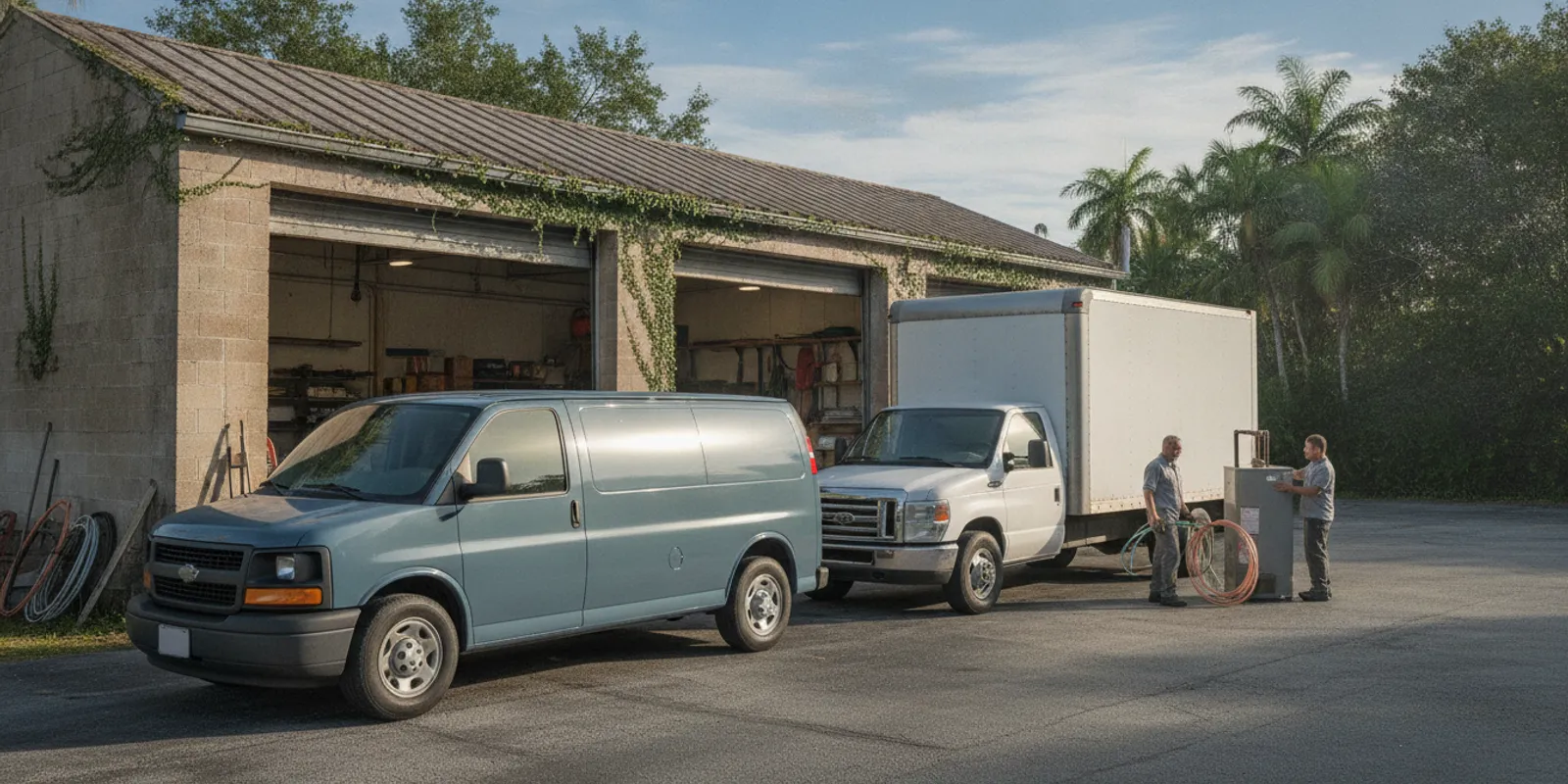
Choosing the best truck for a plumbing business starts with the work it must support. The right vehicle should carry tools and materials, fit daily routes, and remain practical at job sites.
Contact DeBary Truck Sales about your truck needs
How should you define the work?
Begin with a representative workday. List service calls, installation jobs, crew size, parking conditions, and the tools and materials that normally travel in the vehicle. Then list the largest normal load separately. An occasional unusual project should be considered, but it should not automatically make every daily route depend on the biggest body available.
- Record the tools technicians need at nearly every stop.
- Measure long, tall, or awkward equipment.
- Estimate the loaded weight of tools, supplies, people, shelving, and installed equipment.
- Note whether staff need side, rear, or interior access.
- Identify narrow streets, garages, commercial sites, and highway routes.
Divide cargo into permanent equipment, replenished supplies, and occasional materials. This makes it easier to decide what must stay on the truck and what can be obtained for a specific job. A clear list also gives a dealer useful information when comparing vehicles.
Build the list from actual work orders rather than memory alone. Review a typical week and note which fittings, tools, and materials appear repeatedly. Then identify the less common items that are large or heavy enough to affect vehicle choice. This distinction can prevent a truck from being specified around a rare job while still making room for the work that keeps the schedule moving.
Which body types should plumbers compare?
A cargo van may suit frequent residential calls where contained storage and easy access matter. A box truck may be useful when larger or bulkier loads are routine. A cab and chassis can be considered when a buyer has a defined body plan. DeBary Truck Sales offers cargo vans, box trucks, and cab and chassis trucks. Confirm the exact configuration and availability of any vehicle.
| Option | May fit when | Check first |
|---|---|---|
| Cargo van | Frequent calls require contained tools and supplies. | Interior dimensions, doors, payload, passenger space, and storage fit. |
| Box truck | Bulky materials and a separate cargo body are routine. | Body size, loading method, ratings, height, and maneuverability. |
| Cab and chassis | A particular body or specialized configuration is planned. | Chassis ratings, body compatibility, completed weight, and installation scope. |
These categories are starting points, not guarantees. Compare the exact vehicle, labels, documentation, condition, and completed equipment rather than choosing from a category name.
For service work, a van's enclosed cargo area can keep tools together and make frequent stops straightforward, but shelving and fixed equipment consume space and add weight. A box truck can provide a distinct cargo area and room for larger items, but its exterior dimensions and loading arrangement need to suit the places the crew visits. A cab and chassis calls for more planning because the final body and equipment affect the finished truck's dimensions and weight.
Think through a real task, such as replacing a water heater or carrying pipe for a scheduled installation. Which items must be immediately reachable? Which can be secured farther back? How will a technician unload a bulky item without moving half the cargo? These practical questions often reveal more than a broad label like âwork truck.â
How do storage and payload differ?
Storage volume and payload are separate issues. A truck may have unused floor space while approaching its carrying limit. Another may have adequate payload but poor access or dimensions for the equipment. Include occupants, shelving, bins, tanks, compressors, ladders, and permanent modifications in the loaded estimate.
- List usual cargo and its approximate weight.
- Measure bulky items in three dimensions.
- Use the heaviest normal combination as a test case.
- Review manufacturer labels and vehicle documentation.
- Ask a qualified professional when the configuration or loading plan is unclear.
Do not treat a general online description as proof of capacity. Verify the specific truck. Keep a worksheet for each candidate so the same assumptions are used in every comparison.
Account for the completed vehicle, not just the base model. Shelves, partitions, tool cabinets, ladders, and permanently carried equipment contribute to the weight being carried. Keep people in the estimate too. If a crew normally travels together, evaluate that occupied configuration rather than an empty truck on paper.
Also consider how the load is distributed. Heavy items need secure locations, and a cargo plan should not assume that every available inch can be used without affecting access or stability. If a candidate has been modified, ask what was added and seek documentation that helps establish its configuration. When information is uncertain, have a qualified professional assess the question instead of relying on a generic model specification.
What layout helps technicians?
A useful layout reduces searching and unnecessary unloading. Put frequently used tools where they can be reached at typical job sites. Separate everyday hand tools from less frequent supplies. Plan locations for long items such as pipe or ladders, if they are part of the workload. Check whether drawers, shelves, and bins can be accessed through the doors staff will actually use.
Make a simple cargo-area sketch before visiting. Mark the dimensions of fixed equipment and leave room to remove items safely. Think about the work sequence: a technician who opens the rear doors at every stop may need a different arrangement from a crew that loads materials at a yard. DeBary Truck Sales provides used truck body information for buyers considering body options. Confirm proposed fabrication and fit before proceeding.
A government guide to mobile-unit layouts illustrates the value of identifying storage and work areas in a completed vehicle. The subject is different, but the planning principle applies: evaluate where work happens, not just the empty volume.
Make the sketch usable by the person who will load the truck. Mark access doors, shelves, bins, and the space needed to remove large tools. Then walk through a few job sequences: locating a fitting, unloading a long item, and returning equipment after a call. If the layout requires repeated rearranging, revise it before treating the vehicle as a match.
Plumbing work can involve clean supplies and used or wet equipment on the same route. Plan separate, secure areas where needed and consider how containers will be restrained. Avoid assuming that an empty cargo area is automatically a good workspace; the useful question is whether the intended organization can be installed without compromising safe access or expected capacity.
How do routes and crew needs change the decision?
A solo technician making many calls may value a manageable footprint and quick access. A commercial installation crew may need more materials and passenger space. Map the tightest parking situation, longest drive, largest routine load, and most restrictive entrance. Check height and turning requirements where relevant.
If several technicians share the truck, decide how it will be restocked and how tools return to their places. A layout that works for one person may become disorganized with multiple users. For Florida buyers traveling to Sanford from Orlando, Daytona Beach, Kissimmee, or Deltona, DeBary's used inventory can be a starting point. Confirm current details directly.
Route planning should reflect the whole day, not only the longest highway trip. A vehicle that spends much of its time in residential neighborhoods has different parking and turning demands from one assigned to commercial sites with loading areas. Consider garage clearances, driveway access, and where the truck can be parked while staff work. Measure constraints that are hard limits, rather than assuming a familiar route will accommodate a larger vehicle.
Passenger space matters as well. Decide how many people usually travel together and whether the cab provides the seating and storage arrangement they need. Then test entry, exit, visibility, and the ability to reach job materials without awkwardly unloading other cargo. If several people use the vehicle, ask each to evaluate the proposed workflow.
What should you inspect on a used truck?
Review the individual truck and its records. DeBary Truck Sales emphasizes one-owner, fleet-maintained vehicles and notes that maintenance history is available for many trucks. Ask about the specific vehicle rather than assuming every truck in a body category has the same history.
- What are the year, mileage, configuration, and current condition?
- Are ownership and maintenance records available?
- What ratings appear on labels and documents?
- Has the cargo body been modified?
- What equipment is included?
- What warranty terms apply? DeBary states that a 90-day warranty is included at the advertised price; confirm terms for the purchase.
- Can you arrange an inspection with your mechanic or a local shop?
- Are there signs of water entry, floor damage, door problems, or body repairs?
Organize answers in the same format for every candidate. During a drive, consider visibility, turning behavior, entry, exit, and control placement. A test drive cannot replace an inspection, but it can reveal whether the vehicle is practical for its intended routes.
For a plumbing application, also examine the cargo area's condition and usability. Check doors and latches, floor condition, interior height, tie-down points, and evidence of water entry. Look at modifications that could affect the planned shelving or equipment. Ask what is included in the sale and what would need to be added later, then write the answers down so comparisons do not depend on memory.
Records help tell a vehicle's story, but the records should be read for the specific truck. Note dates, mileage entries, and any periods for which information is not available. Ask direct questions about unclear entries rather than filling gaps with assumptions. DeBary describes many trucks as one-owner and fleet-maintained, with maintenance history available for many; confirm what documentation exists for the vehicle you are considering.
How can you compare candidates fairly?
Mark requirements as essential, useful, or optional before visiting. Score each candidate against work fit, capacity, access, history, configuration, and purchase plan. Write down the reason for each score. Then test the result against the largest normal load and the most difficult normal route.
| Factor | Questions to record |
|---|---|
| Work fit | Does it suit normal calls, installations, crew, and routes? |
| Capacity | Do verified ratings support the expected loaded weight? |
| Access | Can staff reach tools at likely job sites? |
| History | What records exist for this specific truck? |
| Configuration | Are existing body features useful, or is work required? |
| Purchase plan | What confirmed terms, financing, or trade-in details apply? |
Do not compare only the initial purchase figure. Include verified body work, storage needs, and the operational effect of a vehicle that is difficult to load or park. The best match is the one that supports normal work without treating every inch as usable capacity.
Use the same sample load for every candidate. For example, list the crew, ordinary tools, usual replenishment stock, and one of the larger recurring materials. Check how that load fits, where each item goes, and whether workers can reach the essentials without moving bulky equipment. This makes a practical comparison more meaningful than looking at cargo volume alone.
A simple scoring sheet can use a one-to-five rating, but the written reason matters more than the number. A vehicle might score well for storage but poorly for parking access; another might be easy to drive but require changes to hold the regular load. Keep non-negotiable requirements separate from preferences so a strong score in one area cannot conceal a mismatch in another.
How should financing and trade-ins fit?
Once requirements are clear, compare confirmed purchase terms for the specific vehicle. DeBary provides commercial truck financing information. A monthly figure is only one part of the decision, so confirm the full terms and your business circumstances.
If replacing a vehicle, gather its year, mileage, configuration, ownership papers, and available records before requesting a value. Review trade-in information and confirm valuation details directly. For a body modification, request a clear description of the work, measurements, included equipment, and final configuration.
Separate the truck decision from the financing assumptions. Ask which terms apply to the specific purchase and review the full agreement in light of your business plans. If you will trade an existing vehicle, bring accurate details about it and ask what information is needed to evaluate it. Keep confirmed figures beside the same work-fit and inspection notes used to compare vehicles.
What should you prepare before contacting a dealer?
Prepare a one-page request with the plumbing work you perform, body styles under consideration, cargo measurements, estimated loaded weight, passenger needs, preferred access points, routes, and purchase timing. Include what works well and what causes delays in the current vehicle.
DeBary Truck Sales is based in Sanford, Florida, and serves buyers in Florida and beyond. Buyers can explore commercial inventory, discuss financing, and ask about a trade-in. Confirm current inventory, specifications, and transaction details with the dealership.
Bring photographs or a simple drawing of the existing storage arrangement if it helps explain the problem you are solving. Note dimensions for fixed tools and equipment, and identify which items need quick access. If you are evaluating a body change, describe the intended equipment and ask what measurements or specifications should be confirmed before purchase.
Useful questions are specific: What records are available for this vehicle? Which equipment is included? What dimensions and ratings should I verify? Can I arrange an inspection with my mechanic or a local shop? What terms apply to the financing or trade-in I am considering? This preparation supports a focused conversation without assuming that every truck has the same configuration or history.
Ask about commercial trucks for plumbing work
Frequently asked questions
Is a van or box truck better for a plumbing business?
It depends on tools, materials, crew, and routes. A van may suit frequent service calls, while a box truck may suit larger routine cargo. Compare the exact dimensions, access, and ratings.
Should a plumber choose the largest cargo area?
Not automatically. More space can help with bulky loads but may make parking and maneuvering harder. Choose around the regular workload and verify loaded capacity.
Can a used truck be customized?
Some vehicles may suit storage or body modifications. Review the configuration and confirm the fabrication plan and specifications before purchase.
What records should I request?
Ask for available ownership and maintenance records, vehicle documentation, ratings, modification details, and applicable warranty terms. Ask about gaps you do not understand.
The best choice is the truck that fits your plumbing workload, carries its expected load within verified ratings, and gives your crew practical access every day.


